
Top Tips for Finding Commercial Premises for Sale
Stepping into the world of property ownership is a monumental milestone for any enterprise or investor. Whether you are tired of fluctuating rental costs, looking to build long-term equity, or seeking a reliable income-generating asset, searching for commercial premises for sale requires a strategic mindset.
Unlike residential real estate, the commercial sector is governed by complex valuations, stringent regulations, and unique operational dynamics. Before you sign on the dotted line, it is crucial to equip yourself with the right knowledge. Here is your comprehensive guide to navigating the market when you are ready to buy commercial property starting with where to look (for example, you can browse verified businesses for sale on Exity today and narrow down opportunities by industry and location).
Define Your Strategy and Property Type
The commercial real estate landscape is vast. Before you start browsing commercial property real estate for sale, you must align your property search with your overarching business or investment goals. If you are buying an operating business along with its premises, it helps to start with broader market supply (e.g., businesses for sale) and then filter into your target city or region (such as businesses for sale in Melbourne).
Understanding Asset Classes
Different types of properties offer entirely different risk profiles and returns.
Retail vs. Industrial: If you are an investor weighing your options, comparing industrial vs retail property investment returns is essential. Retail spaces heavily rely on consumer foot traffic, local demographics, and storefront visibility. In contrast, purchasing warehouse space for logistics has seen explosive growth in recent years, driven by the e-commerce boom, offering lower tenant turnover and highly reliable yields. If you are focused on hospitality-led retail, browsing category pages like cafes for sale in Melbourne, restaurants for sale in Melbourne, or bars for sale in Melbourne can help you benchmark locations and price expectations quickly.
Mixed-Use Properties: You might also encounter mixed-use developments, often listed as commercial residential for sale. These properties combine retail or office space on the ground floor with apartments above, providing investors with diversified income streams that protect against sector-specific market downturns.
Starting from Scratch: If existing buildings do not meet your specific architectural or operational needs, looking for commercial land for sale might be your best route. This allows for a custom-built facility, though it requires navigating construction loans and longer timelines.
Master the Financials: Valuation and Funding
When you purchase commercial real estate, relying on emotional appeal is a fast track to financial trouble. Commercial properties are valued based on their income potential, not just bricks and mortar.
How to Evaluate the Asking Price
Understanding how to value a commercial building for purchase is your first line of defense against overpaying. While the "Sales Comparison Approach" (looking at recently sold similar properties) is useful, the "Income Capitalization Approach" is the gold standard.
For investors, mastering the net initial yield calculation for investors is non-negotiable. This metric is calculated by taking the property's generated annual rent, subtracting operational costs, and dividing that figure by the total purchase price (including buying fees). This percentage allows you to directly compare the profitability of different commercial premises to buy across varying locations and asset classes. If you want a practical valuation reference point for hospitality, see business valuation in Melbourne for a restaurant and use Exity’s valuation tool (manual) to sense-check assumptions.
Securing Your Financing
Unless you are buying in cash, you will need to navigate commercial mortgage eligibility requirements. Commercial lenders are typically much stricter than residential mortgage providers. They will scrutinize:
Debt Service Coverage Ratio (DSCR): The property's ability to cover its debt through its own income.
Business Financials: Your company's credit score, profit and loss statements, and balance sheets.
Down Payment: Be prepared to put down between 20% and 30% of the purchase price.
If you are weighing whether to engage a specialist to help with deal sourcing and negotiation, compare options in broker vs online marketplace.
Execute Rigorous Due Diligence
Once your offer is accepted, the real work begins. Creating and executing a comprehensive commercial property due diligence checklist is what separates successful buyers from those who inherit expensive disasters.
Legal Title and Ownership Structure
First, clarify the property tenure by evaluating freehold vs leasehold business properties. A freehold purchase means you own the building and the land it sits on outright. A leasehold, however, means you only own the property for a fixed period (sometimes decades or centuries) but must still answer to a freeholder or landlord, often paying ground rent and service charges.
Zoning and Planning Permissions
A beautiful building is useless if you cannot legally run your business from it. You must thoroughly investigate local zoning laws and planning permission categories. Property uses are heavily categorized by local governments (e.g., light industrial, retail, professional services). If the property you are eyeing is categorized for retail, but you plan to use it as a manufacturing hub, you will need to apply for a change of use which is never guaranteed.
Environmental and Structural Checks
Never skip an environmental site assessment for buyers (often called a Phase I ESA). This investigation checks for historical soil or groundwater contamination. If you buy a contaminated site without knowing, you could be held legally and financially responsible for the environmental cleanup, even if you did not cause the pollution.

Understand Taxes and Operational Costs
Owning a physical location fundamentally shifts your tax position and monthly cash flow. Anticipating these changes ensures your business remains profitable post-purchase.
The Tax Advantages and Liabilities
There are significant tax benefits of owning business real estate. Depending on your jurisdiction, you can often deduct mortgage interest as a business expense, claim depreciation on the building over time, and utilize capital allowances for fixtures and fittings.
However, you must also look to the future. Understanding capital gains tax on commercial real estate is vital for your exit strategy. If the property appreciates in value, selling it will trigger a tax event on the profit. Savvy investors often use legal tax-deferral strategies (like a 1031 exchange in the US) to reinvest those gains into new properties without immediate tax penalties.
Running Costs and Business Rates
When transitioning from a tenant to an owner, you become responsible for all maintenance, insurance, and local property taxes. A common question among first-time buyers is: what are business rates for owner occupiers? Business rates are local taxes charged on non-domestic properties. Your liability is calculated based on the property's "rateable value" (its estimated open market rental value). Ensure you factor these annual costs into your operating budget before finalizing the purchase.
Niche Buying Scenarios and Opportunities
Your approach to buying will shift depending on the unique nature of your business and the current state of the real estate market.
Buying for Small Business Retail
If you are a retailer transitioning from leasing to owning, the steps to buying a storefront for small business require a hyper-local focus. You must analyze pedestrian footfall, the proximity of competitor businesses, dedicated parking availability, and window frontage visibility. In practice, this often means comparing micro-markets (for example, in Melbourne you might benchmark demand across areas like CBD & Inner City versus the Eastern Suburbs), and then validating price expectations against real listings such as takeaway businesses for sale in Melbourne.
Capitalizing on Post-Pandemic Trends
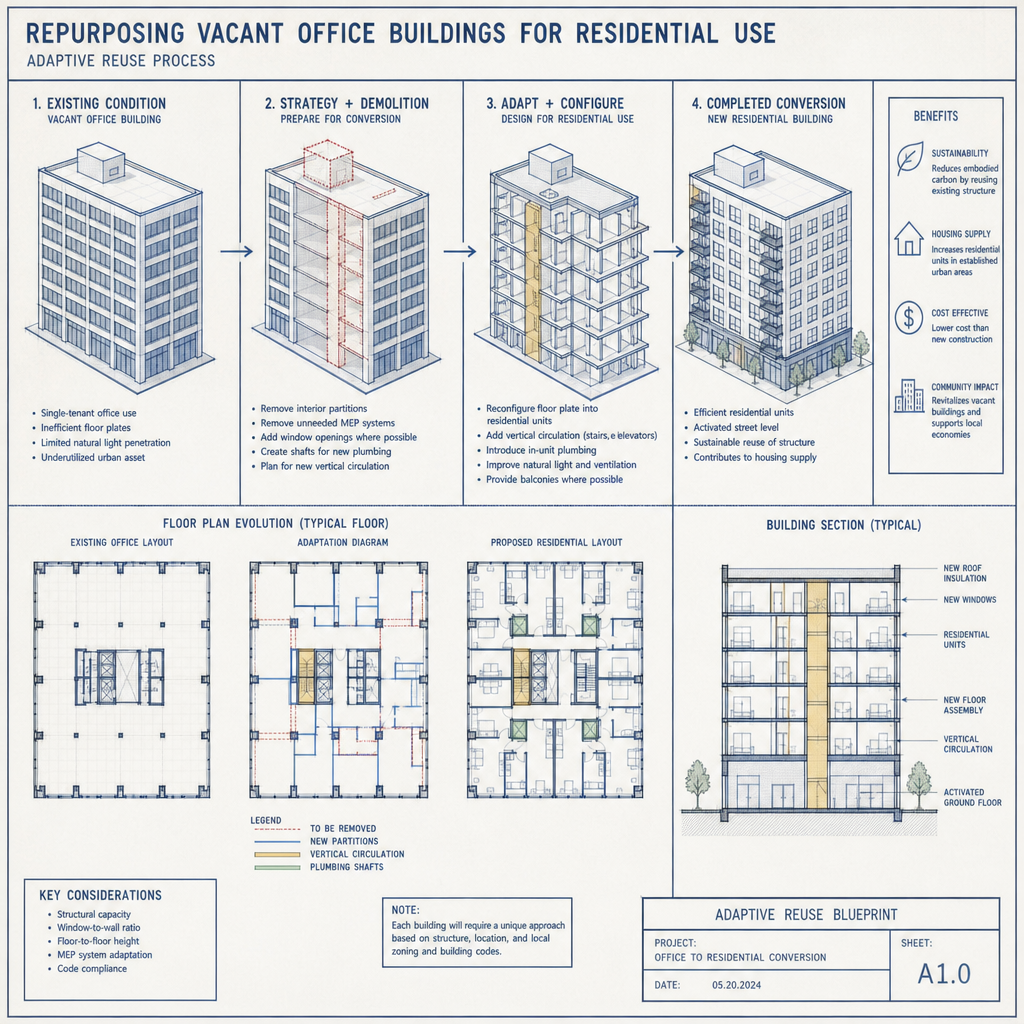
The shift toward remote work has left many commercial spaces empty, creating unique opportunities for visionary buyers. For example, repurposing vacant office buildings for residential use is a massive trend in urban centers. While this strategy requires navigating complex building codes and extensive renovations to add plumbing and residential layouts, it can breathe new life into an underperforming asset and yield incredible returns in housing-scarce cities.
Closing the Deal: Negotiation Strategies
The asking price on commercial premises for sale is rarely the final price. Successfully negotiating commercial purchase price and terms requires a cool head, patience, and solid data.
Use Due Diligence as Leverage: If your building survey reveals that the HVAC system needs replacing, or the environmental report shows minor remediations are needed, use these facts to negotiate a lower purchase price or request that the seller makes the repairs prior to closing.
Negotiate Terms, Not Just Price: Sometimes sellers won't budge on the price, but they will flex on the terms. You might negotiate a longer closing period to secure your financing, or ask the seller to leave behind valuable fixtures, machinery, or office furniture.
Seller Financing: In tight credit markets, see if the seller is willing to hold a portion of the mortgage themselves. This can bridge the gap if a bank won't lend you the full amount you need.
Final Thoughts
Making the leap to purchase a commercial property is not a decision to be taken lightly. It requires a blend of financial acumen, legal awareness, and strategic foresight. By defining your needs clearly, mastering the valuation metrics, and strictly adhering to your due diligence checklist, you can successfully navigate the market of commercial premises for sale. If you’re still researching the process end-to-end, the guide on how to buy a business in Australia is a helpful companion read, and you can explore more practical insights in the Exity blog. If you want help assessing a specific opportunity, reach out via Contact Us.
Q&A
Question: How do I choose the right type of commercial property for my goals?
Short answer: Start with your strategy. Retail suits location-driven businesses but depends on foot traffic and demographics. Industrial/warehouse has benefited from e-commerce, with typically lower tenant turnover and steadier yields. Mixed-use (retail/office plus residential) spreads risk across sectors and can smooth income. If existing stock won’t fit your needs, buying land lets you custom-build but expect construction financing complexity and longer timelines.Question: How should I value a commercial building and compare deals across markets?
Short answer: Use multiple methods but prioritize income. The Sales Comparison Approach helps sanity-check pricing, while the Income Capitalization Approach is the standard for investors. Calculate net initial yield as (annual rent − operating costs) ÷ total purchase price (including fees). This percentage lets you directly compare profitability across locations and asset classes and helps you avoid overpaying.Question: What will lenders scrutinize, and how much cash should I plan to contribute?
Short answer: Commercial lenders are stricter than residential. Expect review of the property’s DSCR (its ability to cover debt from its own income), your company’s credit, P&L, and balance sheet. Typical down payments range from 20% to 30% of the purchase price. If conventional financing falls short, consider negotiating seller financing to bridge gaps.Question: What due diligence steps are essential once my offer is accepted?
Short answer: Confirm title and tenure (freehold vs. leasehold) and any obligations like ground rent or service charges. Verify zoning and planning permissions; if your intended use doesn’t match current use, a change-of-use application may be required and isn’t guaranteed. Order an environmental site assessment (Phase I ESA) to uncover contamination risks, and commission structural/building systems inspections. Use any findings (e.g., HVAC replacement, minor remediation) to negotiate price reductions or repairs.Question: What taxes and ongoing costs should I expect as an owner-occupier?
Short answer: Potential benefits include deducting mortgage interest, claiming building depreciation, and using capital allowances for fixtures (jurisdiction-dependent). Plan for capital gains tax on sale; some markets allow deferral strategies (e.g., a 1031 exchange in the US). Operationally, budget for maintenance, insurance, and local property taxes. Business rates (for non-domestic properties) are typically based on the property’s rateable value factor these annual costs into your cash flow before closing.