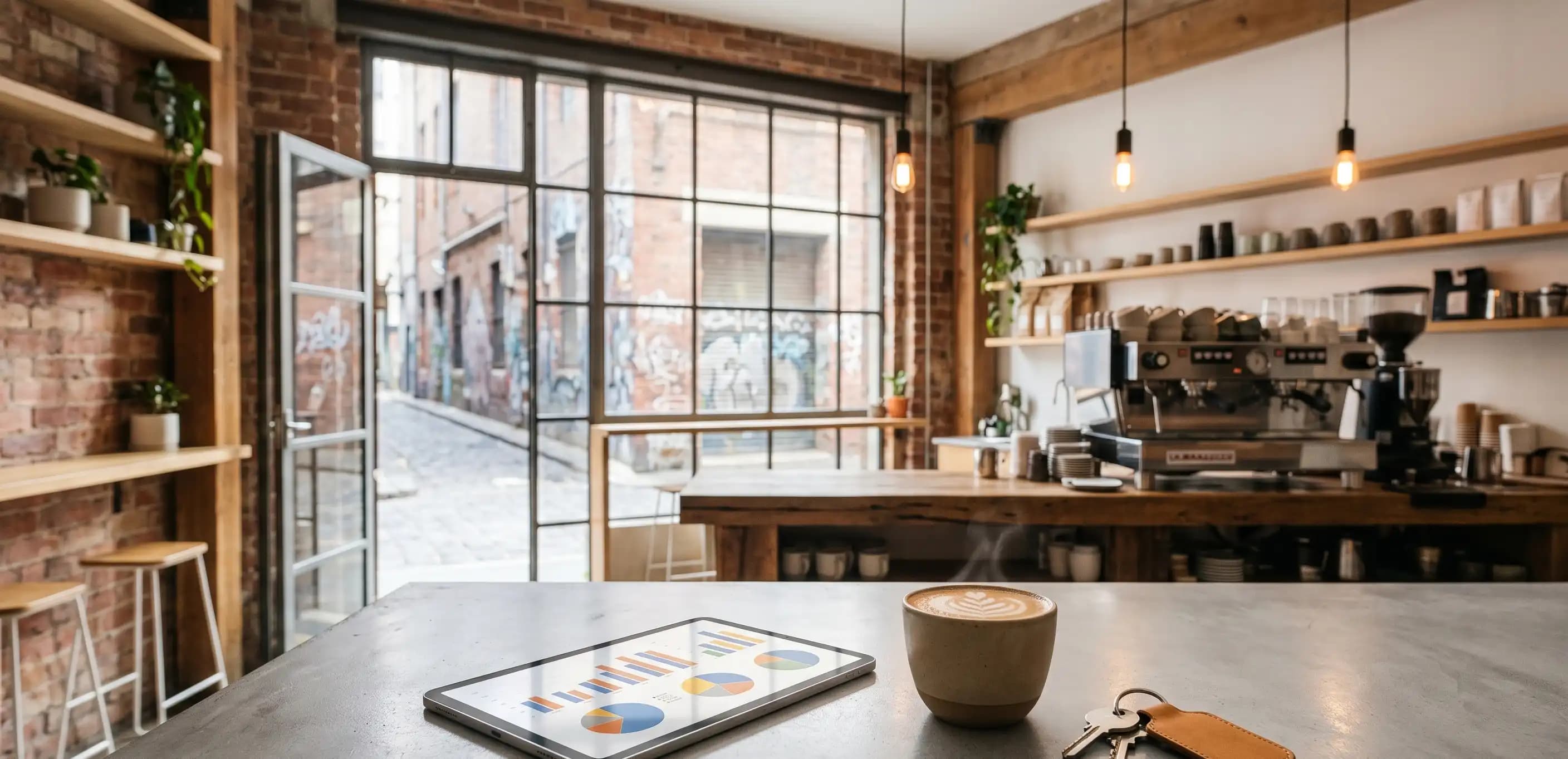
Melbourne is widely recognized as one of the premier coffee capitals of the world. The city's cultural identity is deeply intertwined with its competitive, innovative hospitality industry. For entrepreneurs, taking ownership of a local hospitality business offers an iconic path to financial self-determination. However, entering this market requires an analytical mindset. If you want to know how to buy a cafe in melbourne, you cannot rely purely on a passion for fine espresso. You must evaluate the transaction through the lens of a commercial merger and acquisition.
In 2026, the local hospitality market has entered a mature, data-driven cycle. Buyers who buy a coffee shop melbourne wide encounter highly sophisticated operations, but they also face clear financial risks. This complete guide provides an objective framework to help you evaluate listings, audit business financials, negotiate a commercial lease, and execute thorough due diligence. Our goal is to ensure your investment choice is backed by rigorous empirical analysis.
Whether you are actively looking at a cafe for sale melbourne cbd listing or reviewing a boutique coffee shop for sale melbourne opportunity in the inner northern suburbs, this blueprint will help you protect your capital and pick a highly viable business entity.
The Melbourne Cafe Market in 2026
Operating a coffee business for sale melbourne wide in 2026 looks fundamentally different from previous historical cycles. The industry has shed its reliance on speculative growth and has anchored itself in structural efficiency. According to the latest retail trade data from the Australian Bureau of Statistics (ABS), consumer spending on food and beverage services remains resilient, driven by a non-negotiable cultural commitment to morning coffee rituals.
However, the macroeconomic background requires careful capital allocation. With the Reserve Bank of Australia (RBA) cash rate stabilizing at a mature level, debt capital is more tightly regulated than it was a decade ago. Lenders demand pristine historical accounting records, and buyers must look closely at bottom-line sustainability rather than top-line gross revenue. The inner-city grid has seen a massive return of office workers, making a cafe for sale melbourne cbd opportunity attractive once more, while outer suburban areas continue to benefit from permanent hybrid working models.
What You Actually Buy: Unpacking the Assets
When you purchase an existing hospitality business, you are buying a bundle of distinct tangible and intangible assets. It is vital to separate these elements during valuation to understand exactly where your money is going.
1. Business Goodwill: Goodwill represents the established reputation, customer loyalty, brand recognition, and operational systems of the venue. It is the premium you pay above the net asset value for an enterprise that generates historical profit from day one.
2. Plant and Equipment (Fit-Out): This comprises the unencumbered ownership of commercial assets, including espresso machines, commercial grinders, refrigeration units, combi ovens, POS terminals, and dining furniture. You must verify that all equipment is fully owned and not held under unexpired finance leases or supplier contracts.
3. The Commercial Lease: You are purchasing the exclusive right to occupy the commercial real estate premises under predetermined financial terms. Without a secure lease, the business cannot legally operate, which renders your goodwill completely worthless.
4. Weekly Coffee Kilos: In Victoria, the weekly volume of coffee beans processed is a foundational metric of operational health. A venue processing 30 to 40 kilograms of coffee per week possesses a highly secure baseline revenue stream with predictable, high gross margins.
How to Read Cafe Financials
Analyzing historical financial performance is the most critical phase of the acquisition process. You must look past basic profit declarations and reconstruct the actual operational earnings of the venue.
Gross Revenue vs. Seller's Discretionary Earnings (SDE)
Gross revenue can easily create a false impression of business health. A venue turning over $1,500,000 annually can still lose money if overhead costs are poorly managed. Instead, base your analysis on Seller's Discretionary Earnings (SDE). SDE represents the true financial benefit available to a single full-time owner-operator after adding back non-operational depreciation, discretionary personal expenses run through the company accounts, and one-off historical legal costs.
The Three Critical Ratios
To determine whether a business is structurally sound, apply these strict hospitality industry benchmarks:
· Cost of Goods Sold (COGS) Percentage: This should sit strictly between 25% and 30%. For specialty coffee beans, milk, and fresh menu produce, any metric exceeding 32% indicates poor supplier management or excessive operational waste.
· Wage and Labour Percentage: Total roster expenses, including superannuation and owner wages, must fit within 30% to 35% of gross turnover. If the business relies heavily on award weekend penalty rates without premium pricing structures, your margins will degrade rapidly.
· Rent-to-Revenue Ratio: The total base rent, including outgoings like council rates and body corporate fees, must never exceed 8% to 10% of gross revenue. A high rent ratio is a major structural vulnerability in inner-city Melbourne real estate.
Owner Dependency Risk
Assess how dependent the business is on the current owner's personal presence. If the seller acts as the primary head chef, lead barista, and venue manager simultaneously, you are buying a full-time job rather than a self-sustaining asset. You must factor in the cost of hiring commercial replacement staff when modeling your future net cash flows.
The Lease: Why Remaining Term and Options Make or Break the Deal
A hospitality business is completely anchored to its physical commercial footprint. Under the Victorian Retail Leases Act, you must conduct comprehensive legal due diligence on the lease document before providing a formal deposit.
The total tenure of a lease is calculated by adding the remaining current term to the unexercised further terms or options. As a professional benchmark, you should look for a combined lease lifespan of at least 5 to 10 years (such as a 3+5 year or 5+5 year layout). If a cafe has only 18 months remaining on its current term without further options, you are completely at the mercy of the landlord's future redevelopment intentions upon expiration. A short lease destroys business value and makes securing external bank financing impossible.
Additionally, analyze the annual rent review mechanisms. Look for predictable, fixed percentage adjustments (such as 3% to 4% annually) rather than volatile current market value reviews or Consumer Price Index (CPI) spikes that can unexpectedly disrupt your monthly cash flows.
Due Diligence Checklist for a Cafe
The purpose of due diligence is simple: you must verify that every financial and operational statement made by the seller is fully accurate. Never skip these essential investigative steps:
· Point of Sale (POS) Data Auditing: Match historical daily POS printouts directly against live bank deposit records. Look for unexplainable cash discrepancies or unusual sales spikes right before the marketing campaign began.
· Business Activity Statements (BAS): Request the last 24 months of certified BAS documentation lodged with the Australian Taxation Office (ATO). The revenue stated on your BAS must perfectly mirror the internal accounting software figures.
· Supplier Terms and Material Supply Contracts: Review exclusive supply agreements. Ensure you are not forced into uncompetitive coffee bean pricing arrangements or long-term machinery rental obligations with commercial coffee roasters.
· Food Safety and Council Compliance: Verify that the venue possesses a current, clean food premises registration with the local municipal council. Check for outstanding compliance notices regarding grease trap cleaning, exhaust canopy filters, or structural waste management upgrades.
Related Reading: If you want to understand how sellers organize their documentation during a disposal cycle, read our comprehensive companion piece, How to Sell Your Cafe or Restaurant in Melbourne.
Step-by-Step Guide: How to Buy a Cafe in Melbourne and Determine Value
Valuing an independent hospitality venue requires a structured approach based on earnings multiples. In the Melbourne market, independent small business coffee profiles are priced between a 1.5x and 2.5x multiple of their verifiable SDE.
|
Cafe Profile Type |
Typical Price Multiple |
Key Operational Value Driver |
|
Boutique Espresso Bar (Limited Food) |
1.5x to 1.8x SDE |
Ultra-low labor costs, high margins on coffee kilos, minimal kitchen footprint. |
|
Suburban Brunch Cafe (Full Kitchen) |
1.8x to 2.3x SDE |
Long commercial lease, high weekend foot traffic, strong liquor license asset. |
|
High Volume CBD Landmark Location |
2.2x to 2.5x+ SDE |
Corporate catering relationships, modern equipment assets, minimal owner dependency. |
To run an interactive valuation scenario based on live operational inputs, you can utilize the free Exity Valuation Tool to review real-time industry cost benchmarks.
Financing the Purchase
Acquiring a commercial business entity requires a clear capitalization strategy. Most buyers utilize a combination of cash reserves, equity drawn from residential property holdings, or commercial business loans. Lenders evaluate hospitality loans with great caution. To maximize your chances of finance approval, you must present a detailed business plan, a clear cash flow forecast for the first 12 months, and a signed contract contingent upon financial approval. Keep your borrowing structures conservative to ensure that your monthly SDE comfortably exceeds your principal and interest commercial loan obligations.
Buying Through a Marketplace vs. a Broker
The channel you choose to find a business heavily impacts the structure of the transaction. Traditional brokers act exclusively on behalf of the seller, and their commission demands can push the purchase price up artificially. Brokers often limit direct access to the business owner, making clear communication difficult during negotiations.
By contrast, modern digital platforms like Exity eliminate intermediary friction entirely. Exity functions as an open, peer-to-peer marketplace where buyers connect directly with hospitality owners. Because there are no broker commission expenses added to the sale, transactions are conducted with total transparency, allowing you to access clear historical books and negotiate terms directly with the principal operator.
Frequently Asked Questions (FAQs)
· What is a good weekly coffee volume for a Melbourne cafe?
A stable, profitable inner-suburban cafe should process between 25 and 40 kilograms of coffee beans per week. Venues processing over 50 kilograms possess exceptional baseline cash flow security, as coffee sales represent the highest gross profit margin sector in hospitality operations.
· How long does the due diligence process usually take?
A standard due diligence window takes between 14 and 21 days from the initial signing of a conditional heads of agreement. This timeline gives your commercial accountant and lawyer sufficient time to thoroughly verify all tax records, POS statements, and lease obligations.
· Can a landlord refuse to transfer a lease to a new buyer?
Under the Victorian Retail Leases Act, a commercial landlord cannot unreasonably withhold consent to a lease assignment if the incoming buyer can demonstrate adequate financial capabilities and relevant business management experience to run the venue successfully.
· What are outgoings in a commercial cafe lease?
Outgoings are operational property expenses billed in addition to your base rent. These typically include municipal council rates, water rates, building insurance premiums, and body corporate fees. Always ensure outgoings are factored into your weekly overhead calculations.
Conclusion: Securing Your Future in Hospitality
Learning how to buy a cafe in melbourne is an achievable goal if you follow a structured, analytical process. By separating true operational cash flows from emotional seller narratives, verifying lease longevity, and running rigorous due diligence, you can confidently purchase a business that delivers long-term financial security.
Avoid the friction, delays, and inflated costs associated with traditional intermediaries. Take full control of your investment journey from day one.
Ready to become your own boss?
Browse verified Melbourne cafe listings directly from owners on Exity today
and secure your ideal hospitality venue!