
New South Wales (NSW) boasts one of Australia's most dynamic, diverse, and robust economies. For aspiring entrepreneurs and seasoned investors alike, especially those scanning business for sale nsw listings, the prospect of acquiring an enterprise in this thriving state is incredibly appealing. However, finding the right opportunity requires more than just capital; it demands strategic planning, deep market knowledge, and meticulous execution.
If you are weighing the options of buying an existing business vs starting a new one, the reality is that taking over an established operation often allows you to bypass the stressful, unprofitable early stages of a startup. When you step into a pre-existing enterprise, you acquire momentum.
Whether you are seeking a bustling café in the heart of Sydney or a quiet manufacturing firm on the coast, this comprehensive buying a business in New South Wales guide will walk you through the essential steps to ensure your next investment is a resounding success.

The Strategic Advantage: Why Buy an Established Enterprise?
Before diving into the "how," it is crucial to understand the "why." Browsing through a portal of businesses for sale can feel overwhelming, but the benefits of purchasing an established business far outweigh the initial research effort.
When you buy a business that is already operational, you gain immediate access to:
Instant Cash Flow: Unlike a startup, an established enterprise generates revenue from day one.
Proven Business Models: You are buying a concept that has already been tested in the consumer market.
Existing Infrastructure: Trained employees, reliable supply chains, and operational systems are already in place.
Customer Loyalty: Acquiring a business means acquiring its established customer base and brand reputation.
Location, Location, Location: Where to Look in NSW
NSW is geographically and economically diverse. Your lifestyle preferences and industry expertise should dictate where you begin your search for a business for sale nsw.
The Sydney Market
As the economic powerhouse of Australia, Sydney offers high-foot-traffic opportunities, though usually at a premium. If you are looking for small retail businesses for sale Sydney , you will find opportunities ranging from boutique clothing stores in Paddington to bustling convenience stores in the CBD. Because the Sydney market moves quickly, it is highly recommended to collaborate with reputable business brokers in Sydney who have access to off-market listings and can negotiate effectively on your behalf.
Thriving Regional Hubs
Do not limit your search to the capital. There are incredible regional NSW business investment opportunities that offer excellent returns on investment alongside a more relaxed lifestyle.
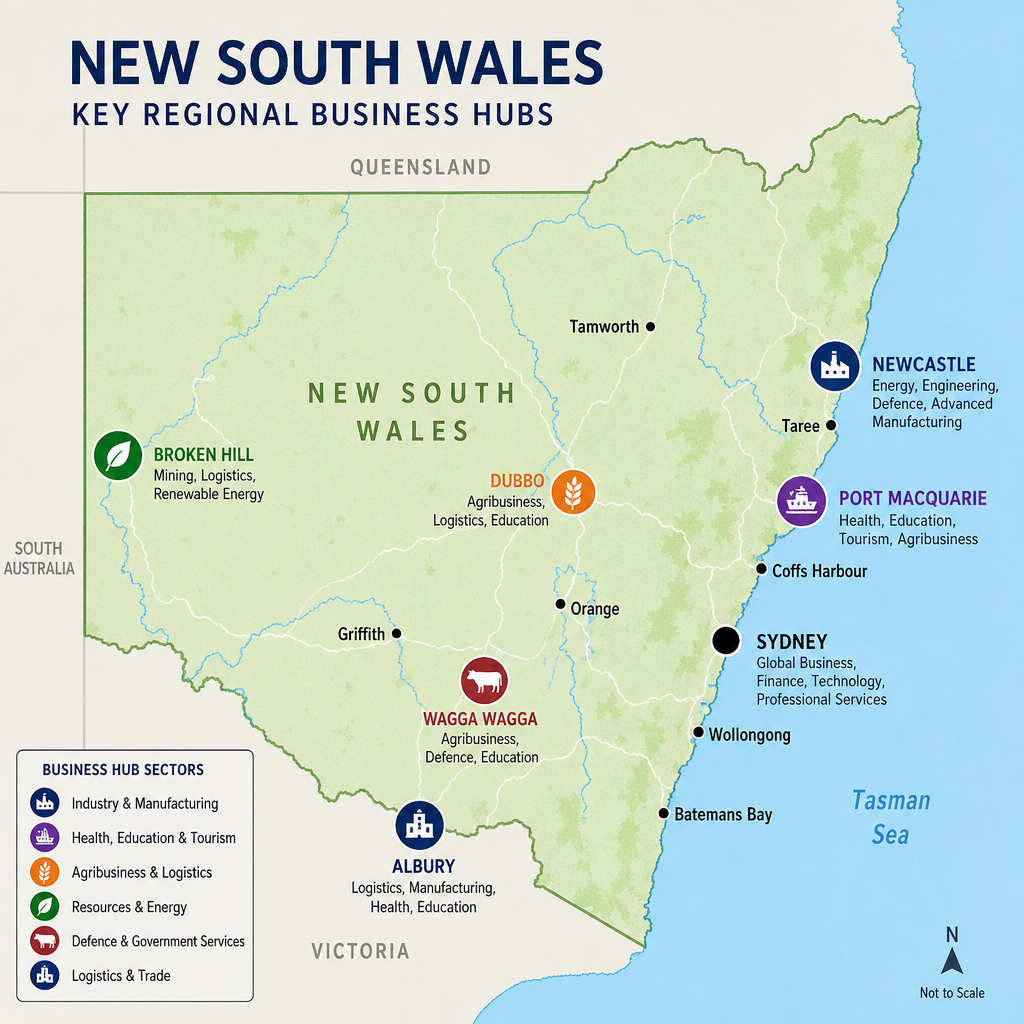
The Hunter Region: Driven by a mix of tourism, mining, and healthcare, this area is booming. A business for sale newcastle nsw au or simply a business for sale newcastle nsw places you in a vibrant coastal city with a rapidly growing urban economy.
The Mid-North Coast: If you want to tap into the booming domestic tourism and retiree demographics, searching for a business for sale port macquarie nsw is a brilliant strategy. Hospitality, allied health, and home services thrive here.
The Southern Borders: Inland hubs are vital logistical and agricultural centers. Finding a business for sale albury nsw, for instance, gives you a strategic foothold right on the border of NSW and Victoria, perfect for transport, distribution, or cross-border retail operations.
Alternatively, if you prefer a turnkey operation with national brand backing, exploring profitable franchise opportunities whether in the city or regional areas can provide excellent support and structured growth.
Understanding Valuation and Finance
Finding the perfect business for sale nsw is only the first step; next, you must determine its true worth and secure the funds to buy it.
Valuing the Business
One of the most common questions buyers ask is how to value a small business NSW. There is no one-size-fits-all formula, but professionals generally use a combination of these methods:
Earnings Multiples (ROI/EBITDA): This is the most common method. The business's net profit (or Earnings Before Interest, Taxes, Depreciation, and Amortization) is multiplied by a risk factor (usually between 1.5 and 4 for small businesses) to determine its value.
Asset-Based Valuation: This calculates the total value of the business's tangible assets (equipment, inventory, property) minus its liabilities.
Market Value: This involves comparing the business to similar recently sold businesses in the same industry and location.
Securing the Funds
Securing finance for business acquisition requires a rock-solid proposal. Lenders will want to see the target business's historical financials (usually the last three years), a robust transition plan, and your personal financial standing. Often, banks will lend against the physical assets of the business, or you may need to leverage your own residential property.
Tax Considerations
You must also factor in tax implications and transfer costs. Buyers frequently inquire about stamp duty on business assets NSW. It is vital to know that the NSW Government abolished transfer duty on standard business assets like goodwill, intellectual property, and statutory licenses on July 1, 2016. However, if the business acquisition includes commercial real estate or land, stamp duty will still apply to the property portion of the sale. Always consult an accountant to understand your exact tax liabilities.
The Ultimate Due Diligence Checklist
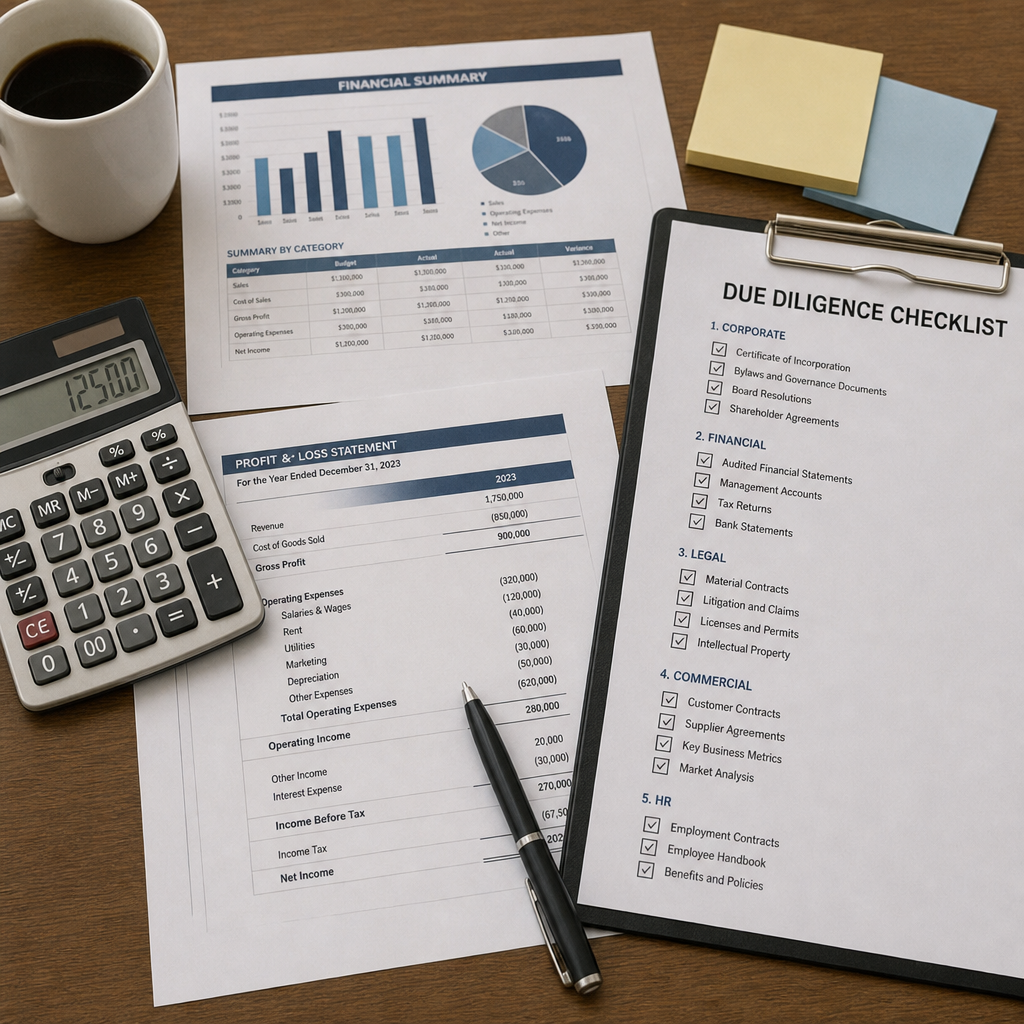
Never take a seller's word at face value. A rigorous investigation is your best defense against buying a failing enterprise. Use this comprehensive due diligence checklist for business buyers to guide your investigation:
1. Financial Due Diligence:
Review Profit and Loss statements, balance sheets, and tax returns for the past 3--5 years.
Verify all revenue streams and check bank statements against financial reports.
Analyze the current list of debtors and creditors.
Review the owner's actual salary and any "add-backs" (personal expenses run through the business).
2. Legal Due Diligence:
Ensure the business structure complies with the business transfer legal requirements Sydney and state-wide laws.
Check for any pending litigation, disputes, or outstanding employee grievances.
Verify the ownership of all Intellectual Property (trademarks, patents, domain names).
3. Operational Due Diligence:
Assess the condition of all physical assets and equipment. Are they owned outright or leased?
Review all existing contracts with suppliers, clients, and vendors.
Evaluate the current staff. Will key employees stay on after the transition?
Navigating Legalities and Regulations
The final hurdle in acquiring a business involves strict adherence to state laws, local council regulations, and property agreements.
Regulatory Compliance
You must ensure the transaction adheres to all Fair Trading NSW business sale regulations. In NSW, if a small business is sold for less than $300,000, the seller is legally obligated to provide a Vendor's Statement (Form 4), which outlines the financial standing of the business.
You must also ask: what permits are required to buy a business? The answer depends entirely on the industry. A café will require health and food safety permits from the local council, and potentially a liquor license from Liquor & Gaming NSW. A construction firm may require specific environmental permits or SafeWork NSW certifications. Ensure that all necessary permits are either transferable or that you qualify to reapply for them immediately upon settlement.
The Commercial Lease Transfer
If the business operates out of a physical storefront or warehouse, you are not just buying the business; you are taking on a property agreement. The commercial lease transfer process NSW (also known as the assignment of lease) is a critical step.
You cannot simply take over the rent payments. The current landlord must officially approve you as the new tenant. The landlord will evaluate your financial history, business experience, and creditworthiness. They have the right to refuse the transfer if they believe you are a financial risk. Therefore, your purchase contract must include a clause stating that the sale is "subject to the successful assignment of the lease." If the landlord refuses, you can walk away from the deal without losing your deposit.
Conclusion
Acquiring an enterprise in New South Wales is a powerful way to secure your financial future, fast-track your entrepreneurial ambitions, and tap into one of the world's most stable economies. From the bustling retail strips of Sydney to the booming regional markets of Newcastle, Port Macquarie, and Albury, the opportunities are boundless.
By understanding the valuation process, executing a flawless due diligence strategy, and adhering to NSW legal and lease transfer requirements, you can mitigate your risks and maximize your rewards. Take your time, consult with professional brokers, accountants, and legal advisors, and soon enough, you will transition from browsing business for sale nsw listings to holding the keys to your very own successful business.
If you want to compare more buying pathways, start by exploring Browse or businesses for sale, then read our guide on how to buy a business in Australia. If you need a baseline estimate before speaking with advisors, try the valuation tool (manual) or reach out via Contact Us.
Q&A
Question: Why buy an established business in NSW instead of starting from scratch?
Short answer: Buying an operating business lets you bypass the risky, unprofitable startup phase and step straight into momentum. You gain immediate cash flow, a proven business model, existing infrastructure (trained staff, supply chains, systems), and an established customer base and brand reputation. If you want extra structure and support, consider profitable franchise opportunities in NSW, which can offer turnkey operations with national brand backing.
Question: Where should I look for businesses for sale in NSW, and how can brokers help?
Short answer: Match location to your lifestyle and industry strengths. Sydney offers high foot traffic and diverse options (e.g., small retail businesses in Paddington or the CBD) but often at premium prices and fast-moving timelines, work with reputable business brokers in Sydney for access to off-market listings and skilled negotiation. Don’t overlook regional hubs:
Hunter Region (e.g., business for sale Newcastle NSW): strong tourism, mining, healthcare mix in a growing coastal city.
Mid-North Coast (e.g., Port Macquarie): benefits from domestic tourism and retiree demographics, hospitality, allied health, and home services do well.
Southern Borders (e.g., Albury): strategic for logistics, agriculture, distribution, and cross-border retail.
Question: How do I value a small business in NSW?
Short answer: There’s no single formula, so use multiple methods and compare results:
Earnings multiples (ROI/EBITDA): Multiply sustainable profit (often EBITDA) by a risk-adjusted multiple commonly 1.5 - 4 for small businesses.
Asset-based valuation: Total tangible assets (equipment, inventory, property) minus liabilities.
Market value (comparables): Benchmark against recent sales of similar businesses in the same industry and location.
Professionals often blend these approaches and adjust for factors like growth prospects, key-person risk, and lease terms.
Question: How can I secure finance to buy a business, and what taxes should I expect?
Short answer: Prepare a robust acquisition case. Lenders typically want the target’s last three years of financials, your transition plan, and your personal financial standing. Funding may be secured against business assets, or you may need to leverage residential property. On taxes, NSW abolished transfer (stamp) duty on standard business assets, such as goodwill, intellectual property, and statutory licenses from 1 July 2016. If the deal includes commercial real estate or land, stamp duty still applies to the property component. Always consult an accountant for exact liabilities.
Question: What legal, due diligence, and lease steps are essential before settlement in NSW?
Short answer: Protect yourself with thorough checks and the right contract terms:
Financial due diligence: Review 3–5 years of P&Ls, balance sheets, tax returns; reconcile bank statements; examine debtors/creditors; adjust for the owner’s salary and add-backs.
Legal due diligence: Confirm compliance with Fair Trading NSW business sale regulations and other state laws; check for litigation or disputes; verify ownership of IP (trademarks, patents, domains). If a small business sells for under $300,000, the seller must provide a Vendor’s Statement (Form 4).
Operational due diligence: Inspect asset condition and ownership/leases; review supplier/client contracts; assess whether key employees will stay post-settlement.
Permits and licenses: Requirements vary by industry (e.g., council health/food safety permits and possibly a Liquor & Gaming NSW license for cafés; environmental or SafeWork NSW certifications for construction). Ensure permits are transferable or that you qualify to reapply immediately.
Commercial lease transfer: You need landlord approval for an assignment of lease. Include a clause making the purchase “subject to successful assignment of the lease” so you can walk away with your deposit if approval is refused.