
Imagine stepping into the CEO role of a profitable company on day one, completely bypassing the grueling startup phase, the hunt for initial customers, and the late-night anxieties of product-market fit. This is the reality for modern digital investors. Whether you are a seasoned entrepreneur or a professional looking to diversify your income, finding the right online business for sale is one of the most effective ways to generate immediate cash flow. Many first-time buyers choose to buy online business listings through vetted marketplaces.
The digital acquisition market is booming. From established e-commerce stores to high-traffic blogs, digital assets are being bought and sold like virtual real estate. But how do you navigate this landscape? How do you separate a diamond in the rough from a failing enterprise?
This comprehensive guide will walk you through everything you need to know to successfully buy online business assets, evaluate their worth, and ensure a seamless transition. If you’re also comparing broader opportunities, you can browse businesses for sale on Exity.

Why Buy an Existing Digital Asset?
Starting a business from scratch is inherently risky. Studies show that a vast majority of new businesses fail within their first few years. When you decide to buy online business properties that are already established, you inherit several massive advantages:
Immediate Cash Flow: You start earning a return on your investment from the very first day.
Proven Product-Market Fit: The historical data proves that customers actually want what the business is selling.
Established Traffic and SEO: You bypass the "Google Sandbox" and benefit from years of accumulated search engine authority.
Systems and Processes: Existing standard operating procedures (SOPs) mean you can often step in and run operations smoothly.
For those looking to step back from day-to-day operations, acquiring established assets is one of the most reliable passive income digital business models, provided you put the right management team in place.
Top Categories of Digital Businesses for Sale
When searching for an internet business for sale, you will quickly notice that the market is divided into several distinct categories. Each model has its own unique operational requirements, profit margins, and risks.
1. E-Commerce and Dropshipping
An e commerce business for sale is highly attractive due to its tangible products and straightforward revenue models. This category includes traditional inventory-holding stores, dropshipping models, and Amazon Fulfillment by Amazon (FBA) stores.
When analyzing Amazon FBA businesses for sale pros and cons, it is essential to look at the big picture.
Pros: Amazon handles the storage, picking, packing, and shipping. You benefit from their massive built-in customer base and prime shipping speeds.
Cons: You are entirely reliant on Amazon's platform, meaning their algorithm changes, fee increases, or account suspensions can happen at any time. Furthermore, inventory financing can tie up significant capital.
2. Software as a Service (SaaS)
Buying established SaaS companies is often considered the holy grail of digital acquisitions. Because SaaS relies on recurring monthly or annual subscriptions, revenue is highly predictable. Profit margins are typically very high since there are no physical goods to manufacture or ship. However, evaluating SaaS requires strong technical due diligence to ensure the underlying code is secure, scalable, and well-maintained.
3. Content Sites and Blogs
If you prefer a hands-off approach to physical inventory, looking into websites for sale that monetize via display ads and affiliate marketing is an excellent path. Profitable niche sites for sale, such as a blog reviewing outdoor gear or a recipe website often require very low overhead. The main expenses are hosting and content creation.
Where to Find the Best Internet Businesses
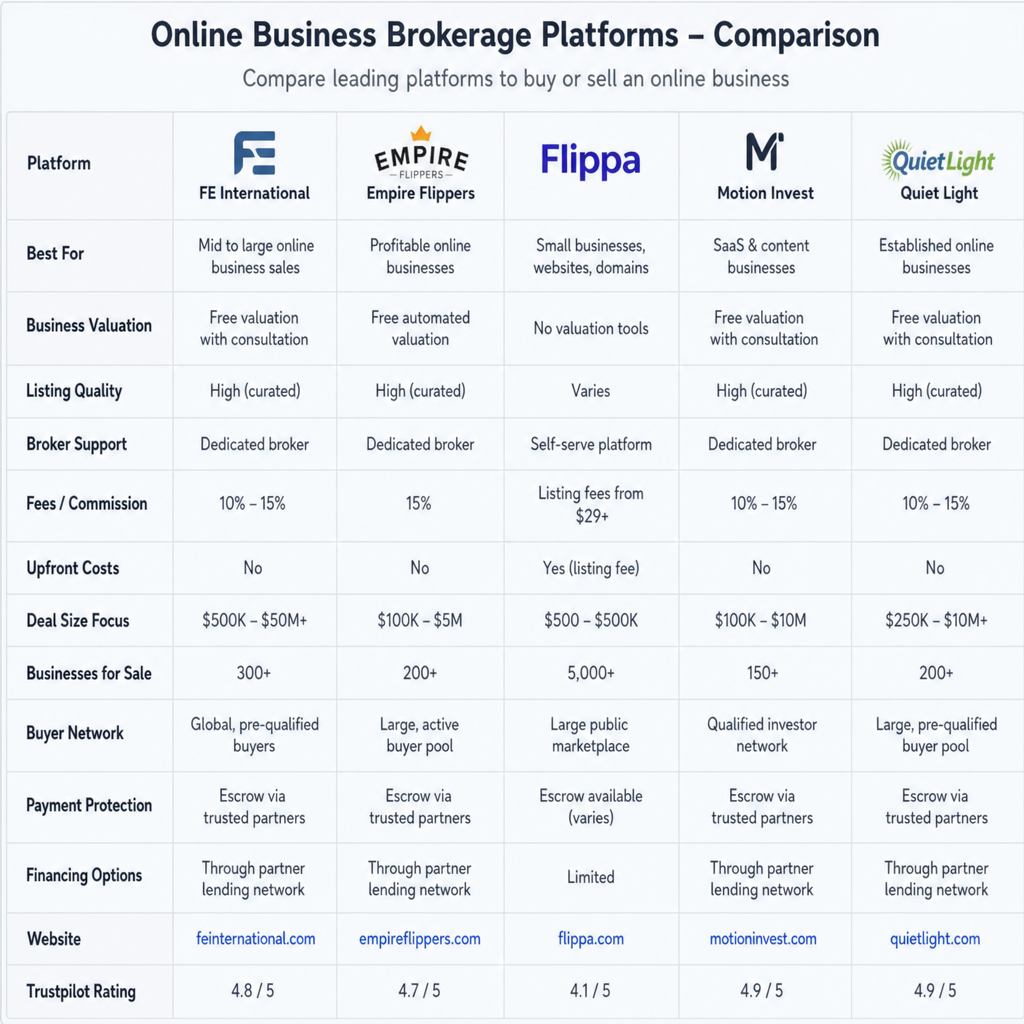
Finding a high-quality online business for sale requires knowing where to look. While private deals occur, most buyers turn to specialized brokerage platforms. The best platforms to buy internet businesses vet their listings to filter out scams and low-quality assets.
If you are looking to buy online business for sale listings, here are a few top-tier avenues:
Empire Flippers: Known for rigorous vetting. They only list profitable businesses, making them ideal for serious investors.
Flippa: An open marketplace with assets ranging from $100 starter sites to multi-million dollar SaaS companies.
Acquire.com (formerly MicroAcquire): A fantastic platform for finding SaaS and e-commerce startups.
FE International & Quiet Light Brokerage: High-end brokerages focusing on six, seven, and eight-figure digital assets.
When reading a Flippa vs Empire Flippers review, the consensus usually comes down to your budget and risk tolerance. Flippa offers more volume and lower-priced assets, but requires you to do heavy vetting. Empire Flippers does the vetting for you, verifying revenue and traffic, but requires a higher minimum budget.
Investors are also looking at specific geographical markets. For example, an online business for sale Australia search might yield localized e-commerce brands or niche service businesses that have a dedicated, low-competition customer base down under. If you’re comparing offline acquisitions too, see businesses for sale across industries.
Navigating Valuations and Pricing
Understanding how businesses are priced is critical so you don't overpay. Most digital assets are valued using a multiple of their Seller's Discretionary Earnings (SDE) or Earnings Before Interest, Taxes, Depreciation, and Amortization (EBITDA).
If you are wondering how to value an ecommerce store , the formula is typically: (Annual Net Profit + Owner's Salary & Non-essential Expenses) x Multiple. E-commerce stores generally sell for a 2.5x to 4x annual SDE multiple, depending on their growth trajectory, supply chain strength, and brand moat. If you’re selling and need a starting point, you can begin a business valuation on Exity.
Conversely, valuation multiples for content websites are often calculated monthly. A high-quality content site might sell for a 35x to 45x monthly profit multiple. A site making $1,000 a month consistently might be priced anywhere from $35,000 to $45,000.
The Crucial Due Diligence Process
Never buy a business based purely on the seller's pitch. The risk assessment of buying online assets is a mandatory phase where you verify every claim made in the prospectus.
To protect your capital, implement a strict due diligence checklist for buying a website:
Traffic Analysis: Dig into Google Analytics. Is the traffic steady, growing, or declining? Are they reliant on a single traffic source? Look out for recent Google algorithm penalties.
Financial Verification: Never accept screenshots of spreadsheets. Demand verified revenue proof for website sales. This means live screenshares of Stripe, PayPal, or Shopify dashboards, alongside corresponding bank statements.
Operational Check: How many hours does the owner actually work? Who writes the content? Are the suppliers reliable? If you’re new to acquisitions, Exity’s guide on how to buy a business in Australia is a helpful primer.
Legal & IP: Ensure there are no pending lawsuits, trademark infringements, or sketchy backlink profiles that could jeopardize the business later.
Closing the Deal and Migrating Assets
Once you are satisfied with your due diligence, it is time to formalize the transaction. You must protect yourself legally and financially during the handover.
The Legal Paperwork
Never transfer money without a signed asset purchase agreement for digital businesses (APA). This legally binding document outlines exactly what is being purchased (domain names, social media accounts, email lists, codebases, inventory), the purchase price, and critical clauses like non-compete agreements for the seller.
Secure Payment
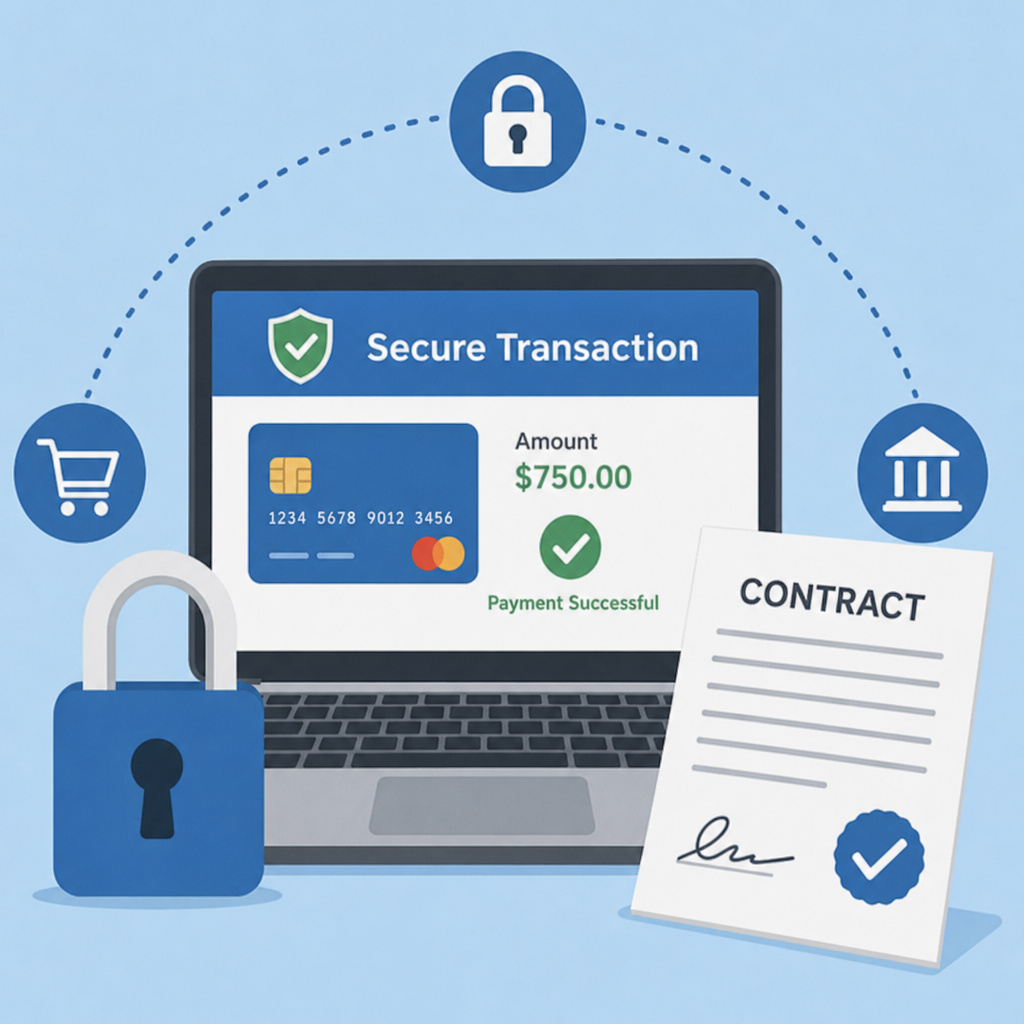
To eliminate the risk of fraud, always use escrow services for online transactions (such as Escrow.com). In an escrow arrangement, you send the funds to a neutral third party. The seller then transfers the digital assets to you. Only after you verify that you have received everything as described and functioning properly are the funds released to the seller.
Technical Migration
The technical handover can be stressful, but careful planning mitigates downtime. For example, learning how to transfer a Shopify store is straightforward but requires precise steps. The seller must grant you staff access, transfer the domain, update the billing information to your credit card, and finally transfer the ultimate store ownership through the Shopify dashboard. Make sure to also update all connected third-party apps, payment gateways, and social media pixels. (Shopify’s official ownership transfer guide is here.)
Post-Purchase Strategy: Hitting the Ground Running
The biggest mistake new buyers make is changing too much, too soon. Before you make radical overhauls to the website's design or pricing structure, you need a solid post-acquisition transition plan.
The First 30 Days: Observe and Learn Your primary goal in the first month is simply to keep the business running exactly as it was. Rely on the seller's training (which should be negotiated in your APA). Understand the daily workflow, get to know the contractors or employees, and monitor the cash flow.
Day 31 to 60: Optimize and Automate Once you are comfortable, look for "quick wins." This might involve cutting unnecessary software subscriptions, negotiating better rates with suppliers, or optimizing the top three best-selling product pages for better conversion rates.
Day 60 to 90: Growth and Expansion Now is the time to implement the growth strategies you identified during your initial evaluation. Launch new ad campaigns, expand the content strategy, or introduce new product lines.
Final Thoughts
The market for digital acquisitions is ripe with opportunity. Whether you are looking for a highly scalable SaaS platform, an easy-to-manage blog, or a robust e-commerce brand, finding the right online business for sale can dramatically accelerate your entrepreneurial journey.
Remember that success in this space requires patience, meticulous due diligence, and a willingness to learn the intricacies of digital operations. By leveraging trusted brokerages, demanding verified financials, and utilizing secure escrow services, you can safely acquire a digital asset that produces wealth and passive income for years to come. Take your time, trust the data over your emotions, and happy hunting.
If you’d like support on the sell-side too, start here: sell your business. Or, for next steps and questions, contact Exity.
Frequently Asked Questions
Question: How are online businesses typically valued across e-commerce, content sites, and SaaS?
Short answer: Most digital assets are priced using a multiple of profit (SDE or EBITDA). For e-commerce, a common approach is (Annual Net Profit + Owner’s Salary and Non-essential Expenses) x Multiple, with stores often selling for roughly 2.5x–4x annual SDE depending on growth, supply chain strength, and brand moat. Content sites are frequently valued on a monthly basis, with quality sites trading around 35x–45x monthly profit (e.g., $1,000/month could be $35,000–$45,000). SaaS is prized for predictable recurring revenue, but instead of relying on a single rule of thumb, buyers emphasize technical due diligence (code quality, security, scalability) alongside financial metrics, given the nature of subscriptions and churn.
Question: What due diligence steps are non-negotiable before buying an online business?
Short answer: Verify everything with data and documentation.
Traffic: Review Google Analytics for stability or growth, source diversification, and any signs of Google penalties.
Financials: Demand verified revenue proof—live screenshares of Stripe/PayPal/Shopify plus matching bank statements; never rely on screenshots alone.
Operations: Confirm owner workload, key processes (SOPs), supplier reliability, and who produces content. For a broader walkthrough, see how to buy a business in Australia.
Legal/IP: Check for lawsuits, trademarks, and backlink risks. Treat this as a mandatory risk assessment phase, not a formality.
Question: What are the main pros and cons of buying an Amazon FBA business?
Short answer:
Pros: Amazon handles storage, picking, packing, and shipping. You tap into Amazon’s enormous customer base and Prime-level delivery expectations.
Cons: Platform dependence is a real risk—algorithm shifts, fee changes, or account suspensions can materially impact the business. Inventory financing can also tie up significant capital.
Question: How do I protect myself during closing and asset transfer?
Short answer: Use a strong contract and neutral payment flow.
Legal: Execute an asset purchase agreement (APA) that lists exactly what you’re buying (domains, social accounts, email lists, codebases, inventory), the price, and protections like a seller non-compete.
Payment: Use escrow (e.g., Escrow.com). Funds go to a neutral third party, the seller transfers assets, you verify everything works as described, then funds are released.
Migration: Follow platform-specific steps (e.g., for Shopify: staff access, domain transfer, update billing to your card, transfer store ownership) and update connected apps, payment gateways, and tracking pixels.
Question: What should my first 90 days look like after buying a digital business?
Short answer:
Days 1–30: Observe and learn. Run the business as-is, leverage seller training, understand workflows, meet contractors, and monitor cash flow.
Days 31–60: Optimize and automate. Cut redundant tools, renegotiate with suppliers, and improve conversion on top product or content pages.
Days 60–90: Grow and expand. Launch new campaigns, scale content, or add product lines based on insights from the first 60 days.
Related reading: what makes a profitable business for sale and FAQs on Exity.
Question: How are online businesses typically valued across e-commerce, content sites, and SaaS?
Short answer: Most digital assets are priced using a multiple of profit (SDE or EBITDA). For e-commerce, a common approach is (Annual Net Profit + Owner’s Salary and Non-essential Expenses) x Multiple, with stores often selling for roughly 2.5x–4x annual SDE depending on growth, supply chain strength, and brand moat. Content sites are frequently valued on a monthly basis, with quality sites trading around 35x–45x monthly profit (e.g., $1,000/month could be $35,000–$45,000). SaaS is prized for predictable recurring revenue, but instead of relying on a single rule of thumb, buyers emphasize technical due diligence (code quality, security, scalability) alongside financial metrics, given the nature of subscriptions and churn.
Question: What due diligence steps are non-negotiable before buying an online business?
Short answer: Verify everything with data and documentation.
Traffic: Review Google Analytics for stability or growth, source diversification, and any signs of Google penalties.
Financials: Demand verified revenue proof—live screenshares of Stripe/PayPal/Shopify plus matching bank statements; never rely on screenshots alone.
Operations: Confirm owner workload, key processes (SOPs), supplier reliability, and who produces content. For a broader walkthrough, see how to buy a business in Australia.
Legal/IP: Check for lawsuits, trademarks, and backlink risks. Treat this as a mandatory risk assessment phase, not a formality.
Question: What are the main pros and cons of buying an Amazon FBA business?
Short answer:
Pros: Amazon handles storage, picking, packing, and shipping. You tap into Amazon’s enormous customer base and Prime-level delivery expectations.
Cons: Platform dependence is a real risk—algorithm shifts, fee changes, or account suspensions can materially impact the business. Inventory financing can also tie up significant capital.
Question: How do I protect myself during closing and asset transfer?
Short answer: Use a strong contract and neutral payment flow.
Legal: Execute an asset purchase agreement (APA) that lists exactly what you’re buying (domains, social accounts, email lists, codebases, inventory), the price, and protections like a seller non-compete.
Payment: Use escrow (e.g., Escrow.com). Funds go to a neutral third party, the seller transfers assets, you verify everything works as described, then funds are released.
Migration: Follow platform-specific steps (e.g., for Shopify: staff access, domain transfer, update billing to your card, transfer store ownership) and update connected apps, payment gateways, and tracking pixels.
Question: What should my first 90 days look like after buying a digital business?
Short answer:
Days 1–30: Observe and learn. Run the business as-is, leverage seller training, understand workflows, meet contractors, and monitor cash flow.
Days 31–60: Optimize and automate. Cut redundant tools, renegotiate with suppliers, and improve conversion on top product or content pages.
Days 60–90: Grow and expand. Launch new campaigns, scale content, or add product lines based on insights from the first 60 days.