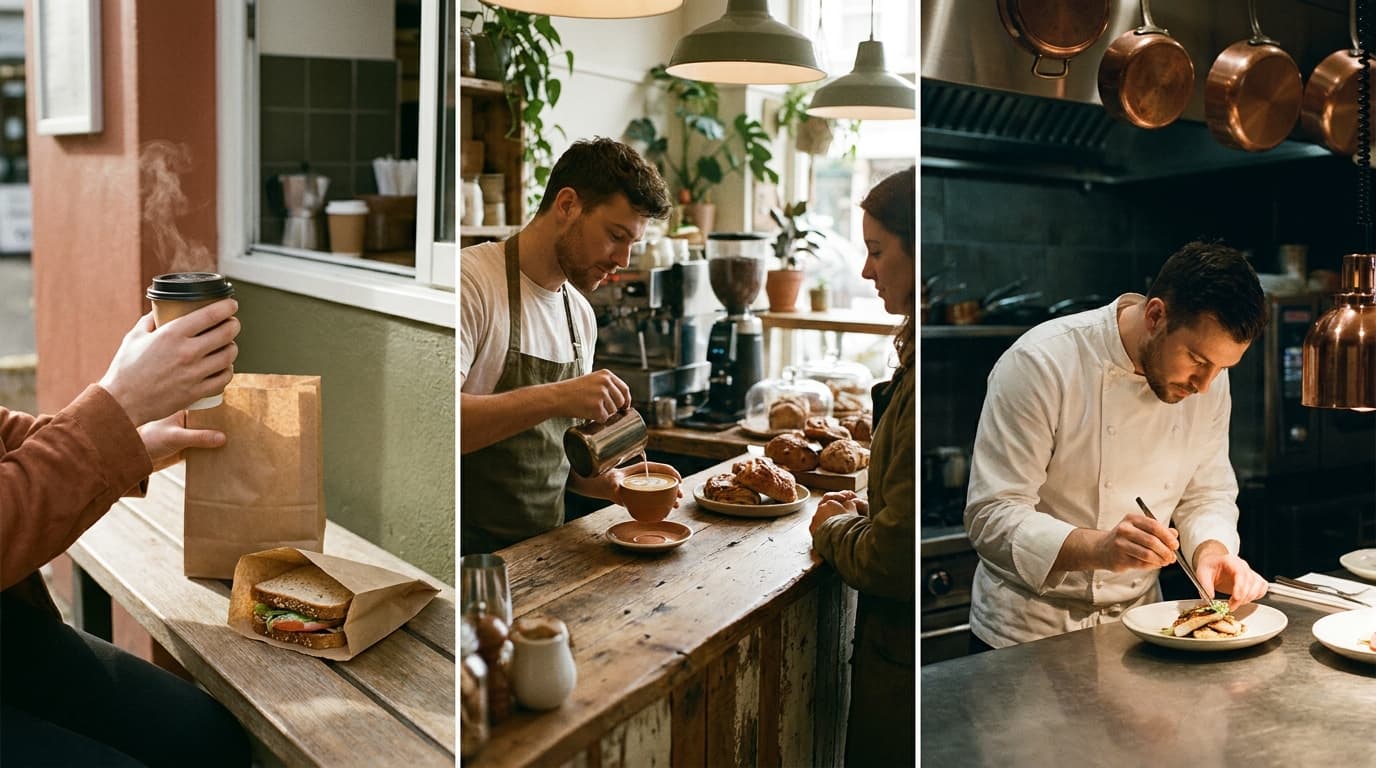
If you want the best net margins and simplest operation, buy a takeaway (typically 10–15% net profit). If you want resilient daily demand and a lifestyle business, buy a cafe (around 4–10% net). If you want the highest revenue and prestige - and can handle the thinnest margins and longest hours - buy a restaurant (usually 3–9% net). The right choice depends on your budget, experience and how hands-on you want to be.
Hospitality is Australia's most consistently transacting business sector, and cafes, restaurants and takeaways are the three most common ways in. But they're very different businesses to own - in margins, hours, complexity and risk. This guide compares all three head-to-head using current 2026 figures, so you can match the right format to your goals before you buy.
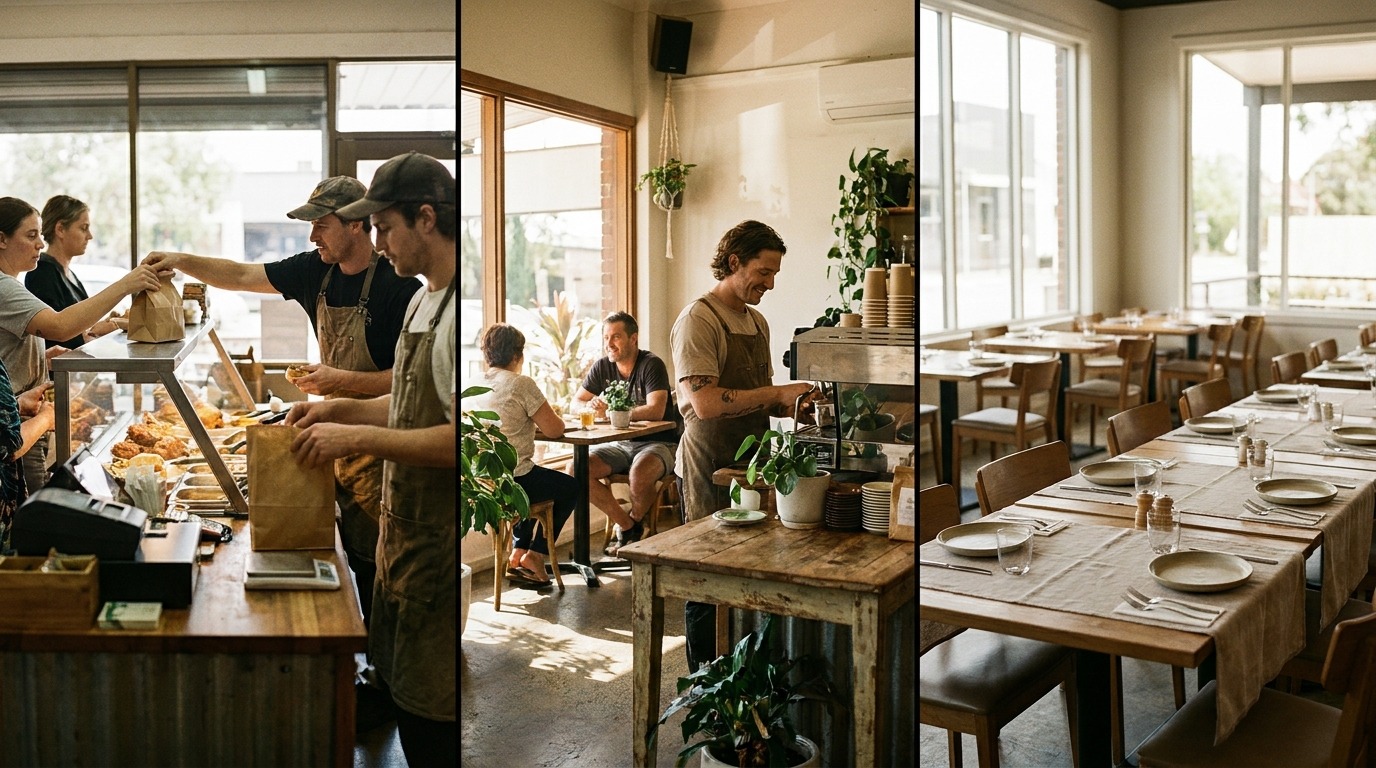
Takeaway vs restaurant vs cafe: quick comparison
Takeaways generally offer the highest net margins and lowest overheads, cafes offer the most resilient demand and moderate margins, and restaurants offer the highest revenue and prestige but the thinnest margins and highest complexity. The table below compares the three across the factors that matter most when deciding which hospitality business to buy.
No format is "best" outright - each suits a different buyer. Below we unpack when each one makes sense.
Which is the most profitable - takeaway, restaurant or cafe?
Takeaways are typically the most profitable of the three on a net-margin basis, often earning 10–15% because they carry lower rent, simpler menus and leaner staffing. Cafes usually sit around 4–10%, buoyed by high coffee margins, while restaurants commonly run the thinnest at 3–9% due to high labour, food and occupancy costs. Owner-operated venues that keep wages down outperform on every measure.
Profitability isn't just about the format, though - it's about how lean the operation is. A well-run takeaway with a tight menu and an owner who works in the business can outperform a much larger restaurant on take-home profit. In Australian hospitality, labour, food and occupancy costs (the "big three") consume roughly 75 - 85% of revenue before profit, so the businesses that win are the ones that control those costs, regardless of format. One 2026 watch-out for all three: third-party delivery platforms can erode net margin by 2 - 4 percentage points if their commissions aren't priced in.
Should you buy a cafe?
Buy a cafe if you want resilient daily demand, high coffee margins and a community-focused lifestyle business you're happy to run hands-on. Cafes benefit from Australia's coffee culture - a daily ritual customers rarely give up - but net margins are moderate and mornings start early. A well-located cafe with a strong lease and clean books is a dependable buy.
Cafes are the classic first hospitality business: approachable, high in repeat custom, and forgiving of a smaller food operation. The trade-off is that margins are moderate and the work is genuinely hands-on. For a deeper look, read our full analysis of whether buying a cafe is a good investment, our Melbourne cafe buying guide, or browse cafes for sale to see what's available.
Best for: first-time hospitality buyers, community-minded owners, and those who love coffee and a daytime lifestyle.
Should you buy a restaurant?
Buy a restaurant if you're passionate about food, want the highest revenue potential and prestige, and can handle long hours, complex operations and the thinnest margins. Restaurants generate the most revenue per venue but face the heaviest labour, food and rent costs, making them the highest-risk, highest-effort hospitality format. Experience and strong systems matter most here.
Restaurants offer the biggest turnover and the greatest creative and reputational upside - but also the steepest challenge. With margins often in the 3–9% range and costs that punish any slip in labour or food management, they reward experienced operators far more than first-timers. Explore restaurants for sale, including options in Melbourne and Sydney, and use our Melbourne restaurant valuation guide to understand pricing.
Best for: experienced hospitality operators, passionate chefs and restaurateurs, and buyers chasing revenue and reputation over easy margins.
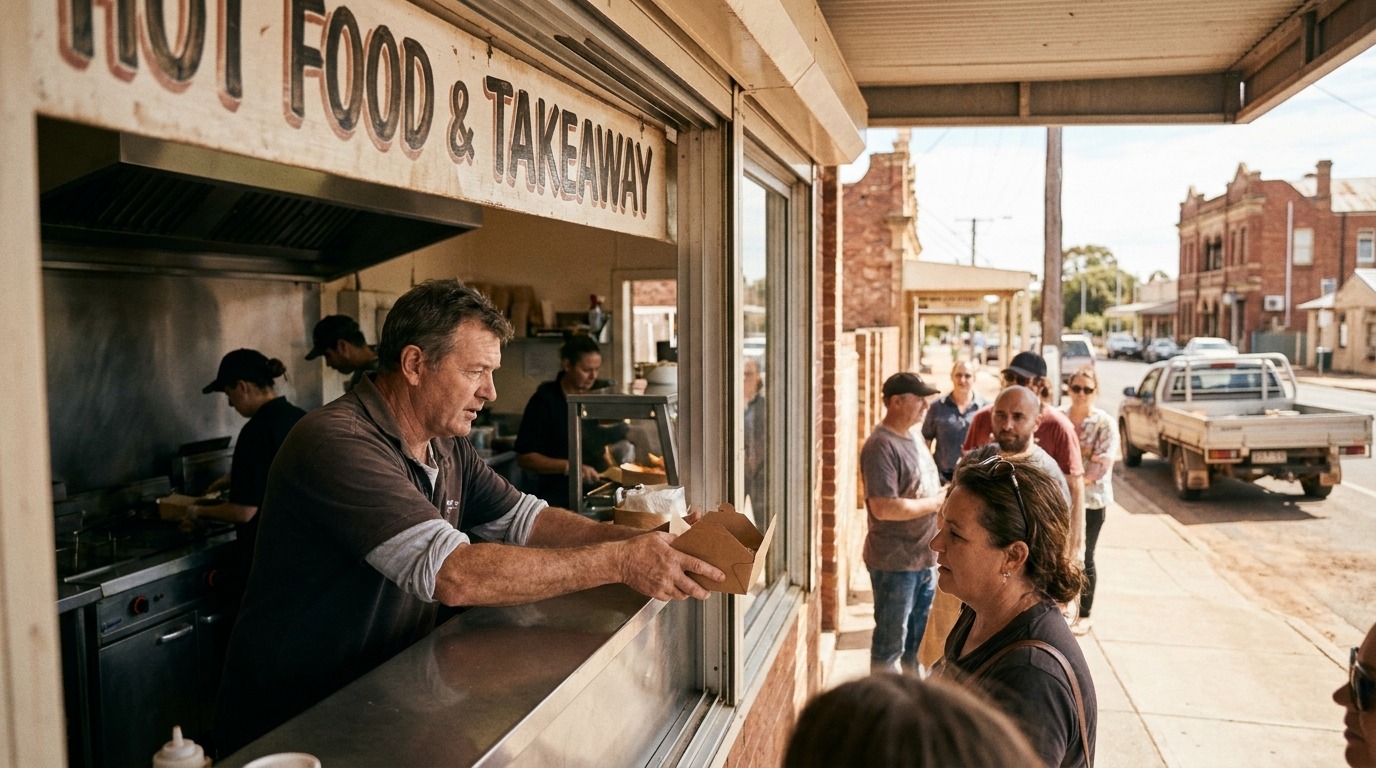
Should you buy a takeaway business?
Buy a takeaway if you want the strongest net margins, lower overheads and a simpler, more flexible operation. Takeaways benefit from value-conscious demand and the boom in food delivery, and owner-operated shops that keep wages lean often earn 10–15% net. Lower fit-out costs and shorter menus make them one of the most accessible and profitable hospitality formats to buy.
Takeaways are the quiet achievers of hospitality: less glamorous than a restaurant, but frequently more profitable and far simpler to run. Lower rent, a focused menu and lean staffing keep costs down, while delivery platforms extend your reach - just make sure their commissions are built into your pricing. Browse takeaway businesses for sale, or narrow to takeaway businesses in Melbourne.
Best for: efficiency-focused, hands-on owners who want strong margins and a simpler operation over prestige.
How much does each cost to buy?
Most small hospitality businesses in Australia sell for around 1.5 to 3 times their annual net profit (SDE). Because takeaways often run higher margins on lower overheads, they can offer strong value; cafes sit in the middle; and restaurants vary widely by revenue and reputation. Always price any venue on its verified net profit, not its turnover or fit-out.
Price follows cash flow, not appearances. A takeaway clearing $120,000 might sell for a similar price to a much larger restaurant with the same net profit, despite very different turnovers. To sanity-check any asking price, run the numbers through our free business valuation tool, and if budget is your main filter, our guide to the best businesses to buy under $100k covers affordable hospitality entry points.
Which hospitality business is right for you?
Choose a takeaway if you prioritise margins and simplicity, a cafe if you want resilient demand and a daytime lifestyle, or a restaurant if you're an experienced operator chasing revenue and prestige. Match the format to your budget, hospitality experience, and how many hours - and how late - you're willing to work. Your lifestyle should drive the decision as much as the numbers.
Ask yourself three questions. How hands-on and how many hours do you want to work? What's your hospitality experience - are you ready for a restaurant's complexity, or better suited to a simpler format? And what matters more: the highest margins (takeaway), the most reliable demand (cafe), or the biggest revenue and reputation (restaurant)? Your answers usually point clearly to one. Our guide to the signs it's time to buy a hospitality business in 2026 can help you time the move.
What should you check before buying any hospitality business?
Before buying any takeaway, cafe or restaurant, verify the net profit against tax returns, BAS and bank statements; check the lease term and rent; observe trade at different times; confirm how much revenue relies on delivery platforms; and assess how dependent the business is on the current owner. Solid numbers and a secure lease matter more than the format.
Whatever you buy, due diligence is what protects you. Sit in the venue across different days, review the financials with your accountant, read the lease closely, and confirm the trading figures don't secretly depend on the owner's unpaid hours or a single delivery app. Our ultimate guide to buying a business in Australia walks through the full due-diligence process step by step.
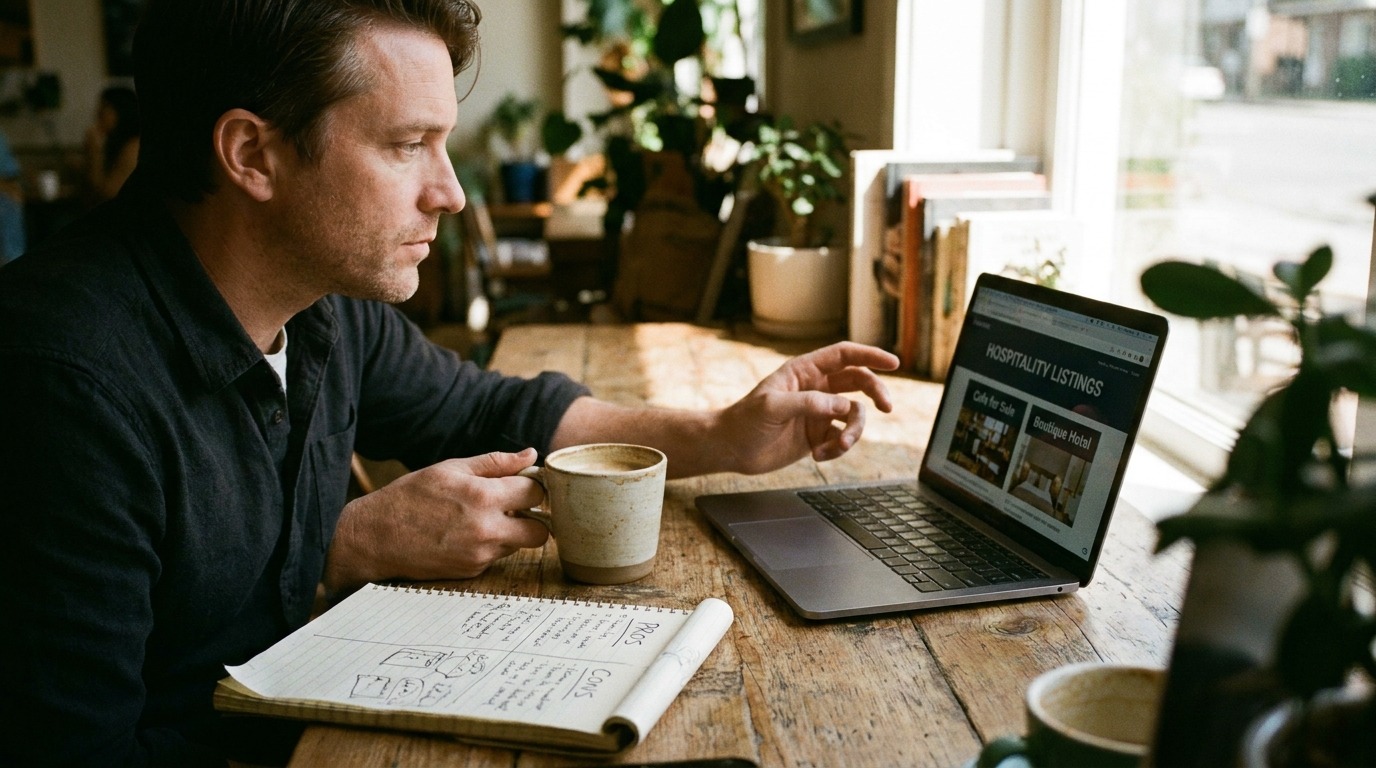
The bottom line
There's no single best hospitality business to buy - only the best fit for you. Takeaways win on margins and simplicity, cafes on resilient demand and lifestyle, restaurants on revenue and prestige. Decide how hands-on you want to be, be honest about your experience and budget, verify every number, and let both the lifestyle and the cash flow guide your choice.
Ready to compare real options? Browse cafes, restaurants and takeaway businesses for sale on Exity, or browse every business for sale to weigh them side by side.
Frequently asked questions
Which is more profitable: a takeaway, cafe or restaurant? Takeaways are typically the most profitable on a net-margin basis, often earning 10 -15% thanks to lower overheads and leaner staffing. Cafes usually sit around 4 -10%, supported by high coffee margins, while restaurants commonly run the thinnest at 3 - 9% due to high labour, food and occupancy costs. Owner-operated venues perform best.
What is the easiest hospitality business to run? A takeaway is generally the easiest hospitality business to run, with a simpler menu, leaner staffing, lower fit-out costs and more flexible hours than a cafe or restaurant. Cafes are moderately complex, while restaurants are the most demanding, with long hours, large teams and intricate operations that reward experienced operators.
How much does it cost to buy a cafe, restaurant or takeaway in Australia? Most small hospitality businesses sell for around 1.5 to 3 times their annual net profit (SDE). The actual price depends on the venue's verified earnings, location and lease rather than its format - a profitable takeaway can cost as much as a larger restaurant with similar net profit. Always price on net profit, not turnover.
Should a first-time buyer choose a cafe, restaurant or takeaway? First-time buyers are often best suited to a cafe or takeaway, which are simpler and lower-risk than a restaurant. Cafes suit those who want a community-focused daytime business, while takeaways suit efficiency-focused owners chasing stronger margins. Restaurants are usually better left to experienced hospitality operators.
Are hospitality businesses a good investment in 2026? Hospitality remains Australia's most consistently transacting business sector, and well-run venues on secure leases can be solid investments in 2026. However, margins are tight across the board due to high wages, rent and food costs, so success depends on buying a proven, profitable venue at a fair price and running it hands-on