
The most profitable businesses to buy in Australia in 2026 are not the flashy, high-revenue ones. They are the low-overhead, recurring-revenue operations that quietly keep more of every dollar they earn. Professional and financial services, laundromats, cleaning businesses, trades and specialised service businesses consistently deliver the strongest net margins, often 15 percent or higher, compared with a national average of around 10 percent. If you want real profit, look for low costs and repeat income, not big turnover.
There is a crucial difference between a business that sounds impressive and one that actually makes money. This guide ranks the most profitable types of business to buy in Australia in 2026 by their real net profit margins, explains why the "boring" businesses win, and shows you how to spot genuine profitability before you buy.

What makes a business profitable?
A business is profitable when it keeps a healthy share of its revenue as net profit, which comes down to three things: low overheads, recurring or repeat revenue, and low reliance on expensive labour. The most profitable businesses in Australia are often the least glamorous ones, because low fixed costs and dependable income matter far more to the bottom line than impressive turnover.
This is the insight most first-time buyers miss. A business turning over $2 million can be less profitable than one turning over $500,000, if the larger one is weighed down by rent, wages and stock. Across most Australian industries, a net profit margin of around 10 percent is considered average, so anything consistently above that is doing something right. The businesses that clear the highest margins tend to share the same DNA: lean operations, repeat customers and pricing power. Always judge a business on its net profit, not its revenue.
What are the most profitable businesses to buy in Australia?
The most profitable businesses to buy in Australia in 2026 include professional and financial services, laundromats, cleaning businesses, trades and essential services, vending, childcare and allied health, niche service businesses, IT and online businesses, automotive services, and well-run takeaways. These combine low overheads, recurring revenue and strong net margins, making them the smartest acquisitions for buyers focused on real returns.
Here are the ten most profitable business types to buy, ranked broadly by net margin and dependability.
Professional and financial services. Accounting and bookkeeping practices, mortgage broking trail books, consulting firms and agencies are among the most profitable businesses in the country, with net margins commonly in the 15 to 25 percent range. Their main cost is knowledge and labour, not stock or premises, and many enjoy recurring, contracted income.
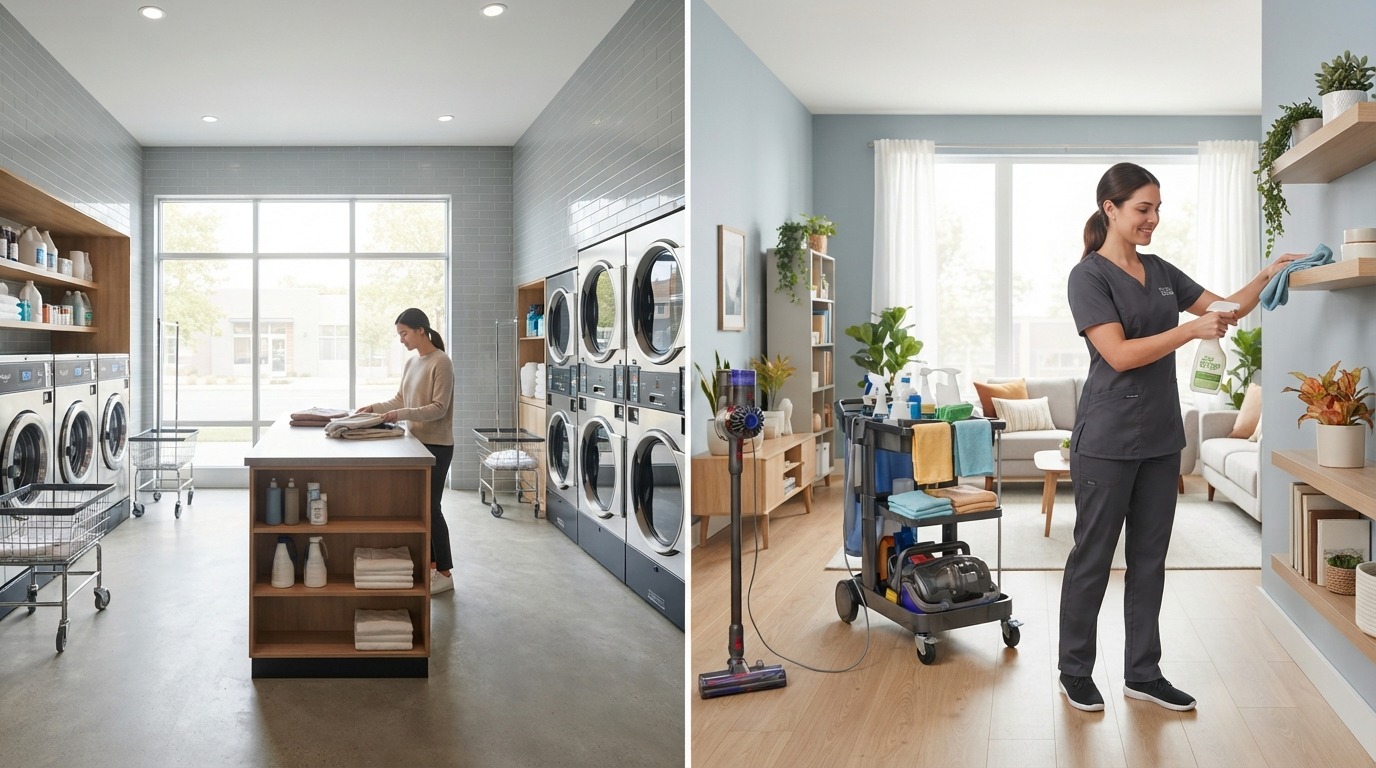
Laundromats and self-service businesses. Self-service laundromats can achieve net margins of 25 to 35 percent because labour costs are close to zero once set up. Equipment is the main investment, but the semi-passive income and defensive demand make them a standout profitable buy.
Cleaning and specialised services. Commercial and domestic cleaning businesses have very low overheads, recurring contracts and easy scalability, which drives strong, reliable margins. See our cleaning business guide.
Trades and essential services. Plumbing, electrical, HVAC and maintenance businesses typically run net margins of 8 to 15 percent, backed by steady demand from construction, property and essential repairs. Well-run trades that quote accurately sit at the higher end.
Vending and self-service. Vending routes and other self-service models generate near-passive income with minimal labour and low running costs, making them efficient profit generators once well located.
Childcare, allied health and home care. Essential, government-supported and growing services, with post-acute and aged care expanding around 7 to 8 percent a year. These enjoy resilient, non-discretionary demand.
Niche service businesses. Pest control, waste services, specialised landscaping and similar operations combine recurring revenue with limited competition, which protects margins.
IT services, SaaS and online businesses. Software, IT consulting and established online businesses offer low marginal costs, recurring subscription revenue and genuine scalability. See our guide to online businesses for accessible options.
Automotive services. Car detailing, hand car washes and mechanical workshops benefit from repeat custom and steady demand, with detailing among the faster-growing niches.
Takeaway and quick-service food. Within hospitality, takeaways and quick-service outlets deliver the best margins, often 10 to 15 percent, thanks to lower overheads and simpler operations than full restaurants. Browse takeaway businesses for sale, and see our takeaway vs restaurant vs cafe guide.
What is the average profit margin for a business in Australia?
The average net profit margin for a business in Australia is around 10 percent, but it varies significantly by industry. Professional services typically achieve 15 to 25 percent, trades and construction 8 to 15 percent, retail 3 to 10 percent, and hospitality just 3 to 8 percent. These ranges, based on ATO benchmarks, explain why low-overhead service businesses are so much more profitable than high-turnover retail and hospitality.
Understanding these benchmarks is one of the most useful things a buyer can do. If a business claims to be highly profitable but sits in a low-margin industry, dig deeper. And if you find a well-run business comfortably above its industry average, that is a strong sign of genuine quality. Use these margins as a lens for every listing you consider.
What is the most profitable small business in Australia?
The most profitable small businesses in Australia are typically professional and financial services and self-service operations like laundromats. Professional services such as accounting practices and mortgage broking trail books combine high knowledge value with low overheads and recurring income, while laundromats achieve some of the highest net margins of any small business thanks to near-zero labour. Both reward buyers who value margins over turnover.
The common thread is low cost and recurring revenue. A mortgage broking trail book or an accounting client base generates dependable income year after year with minimal ongoing effort, while a laundromat prints steady returns from equipment rather than staff. These are the "boring" businesses that quietly build real wealth, which is exactly why savvy buyers seek them out.
Why revenue is not the same as profit
Revenue is what a business earns before costs, while profit is what it keeps after them, and the gap between the two is where most buyers get caught out. A high-revenue hospitality business can leave its owner earning less than an employee, once wages, rent and food costs are paid. A modest-revenue service business with low overheads can deliver far more take-home profit. Always focus on the bottom line.
This is the single most important principle in choosing a profitable business. Hospitality is the classic trap: impressive turnover, long hours and thin margins, with many owners earning less than they would in a job. By contrast, an unglamorous cleaning run or trades business with the same revenue can be far more rewarding. When you assess any listing, ignore the headline turnover and go straight to the verified net profit. Our guide on how to value a business explains exactly how to work out that true figure.
How do you find a profitable business to buy?
To find a profitable business to buy, filter for low-overhead, recurring-revenue models, then verify the net profit against tax returns and bank statements rather than trusting the asking-price claims. Look for businesses with diverse customers, low owner-dependence and margins above their industry average. Marketplaces let you search by industry and price to shortlist the strongest candidates.
Start by browsing profitable businesses for sale on Exity and filtering to the sectors above, or explore businesses under $500k for accessible high-margin options. Low-overhead asset-light franchises are another strong route to a profitable, proven model. Whatever you shortlist, confirm the numbers before you commit.

What should you check before buying a profitable business?
Before buying any business marketed as profitable, verify its net profit against tax returns, BAS and bank statements, confirm the income is not dependent on the owner's unpaid hours, and check how recurring and diverse the revenue really is. A genuinely profitable business will have clean, consistent financials that stand up to scrutiny. If the numbers are vague or unverifiable, treat the profitability claim with caution.
Sellers naturally present their business in the best light, so due diligence is what protects you. Review the financials with your accountant, cross-check the claimed margins against industry benchmarks, and make sure the profit would survive a change of owner. For the full process, follow our ultimate guide to buying a business in Australia, and use our free valuation tool to check that the price matches the profit.
The bottom line
The most profitable businesses to buy in Australia in 2026 are the low-overhead, recurring-revenue operations that keep more of what they earn: professional services, laundromats, cleaning, trades and specialised services. Chase margins, not turnover, verify every profit claim against real financials, and favour businesses that run without the owner. Do that, and you will buy a business that genuinely builds wealth rather than just keeps you busy.
Ready to find one? Browse businesses for sale on Exity and filter by industry and price to find a profitable opportunity that fits your budget.
Frequently asked questions
What is the most profitable business to buy in Australia? The most profitable businesses to buy in Australia are professional and financial services and self-service operations like laundromats. Professional services such as accounting and mortgage broking combine high margins with recurring income, while laundromats achieve net margins of 25 to 35 percent thanks to near-zero labour. Both prioritise low overheads and repeat revenue over turnover.
What is a good profit margin for a small business in Australia? A net profit margin of around 10 percent is average in Australia, while 15 to 20 percent or more is considered strong. Margins vary by industry: professional services typically achieve 15 to 25 percent, trades 8 to 15 percent, retail 3 to 10 percent, and hospitality just 3 to 8 percent. Use these benchmarks to judge any business.
Are cafes and restaurants profitable businesses to buy? Cafes and restaurants have high revenue potential but among the lowest net margins in business, typically 3 to 8 percent, due to high labour, rent and food costs. Within hospitality, takeaways and quick-service outlets are more profitable, often 10 to 15 percent. Many hospitality owners earn less than employees, so verify the real net profit carefully.
How do I know if a business is really profitable? Verify a business's net profit against its tax returns, BAS and bank statements rather than trusting the seller's claims. Check that the income does not rely on the owner's unpaid hours, that revenue is recurring and diverse, and that margins sit above the industry average. Genuine profitability shows up as clean, consistent financials.
What are the most profitable small businesses with low overheads? The most profitable low-overhead businesses in Australia include accounting and bookkeeping practices, mortgage broking trail books, cleaning services, laundromats, vending routes and niche service businesses like pest control. These combine minimal fixed costs with recurring revenue, which is exactly the formula for high net margins and dependable profit