
Have you ever dreamed of stepping out of the traditional corporate grind and into the driver's seat of your own business? In 2026, the entrepreneurial landscape is thriving. If you have found yourself searching for a viable franchise for sale near me, you are already looking at a proven ticket to wealth creation across diverse sectors. Whether you are a seasoned investor or a first-time buyer, the franchising world offers a unique blend of independence and structured support.
However, diving into the industry requires more than just enthusiasm. It demands careful research, financial planning, and a deep understanding of legal agreements. If you want to see what’s on the market right now, you can browse verified businesses for sale on Exity and compare opportunities side by side.

When the entrepreneurial bug bites, the first major hurdle is deciding between building a brand from scratch or purchasing a proven model. The debate often comes down to your risk tolerance and desire for autonomy. Starting an Independent Business: Allows for absolute creative control, but it comes with a high failure rate. You must build brand awareness, create operational systems, and test the market with your own capital. Buying a Franchise: Investing in an established franchise business for sale provides a strategic shortcut. You are buying into a recognized brand name, a proven product or service, and a pre-packaged operational system. While you sacrifice some creative freedom, the reduced risk and accelerated path to profitability make it a highly attractive route for modern investors. If you’re also comparing franchises to other options, it can help to review current businesses for sale to see how different models stack up in your target industry. The current market is teeming with diverse concepts. From tutoring centers and quick-service restaurants to home-service brands, finding the right fit requires aligning your passions with market demand. You do not need a million dollars to become a successful business owner. The market is currently rich with low cost franchise opportunities and cheap franchise opportunities, particularly in B2B services, mobile pet grooming, and education. Service & Cleaning Sectors: Investing in a commercial cleaning franchise for sale offers an incredibly high yield with low overhead, as these models typically lack the heavy real estate and equipment costs associated with brick-and-mortar retail. If you’re considering a service-based model, see what a real listing pipeline can look like by exploring buying a cleaning business in Australia. Education Sectors: If you prefer an enrichment or child-focused model, looking into an established option like a kumon franchise for sale allows you to leverage a globally recognized brand with a structured, low-overhead operational blueprint. For those who want to keep their day job or diversify their investment portfolio, semi-absentee arrangements are highly desirable. In this setup, you "manage the manager." You spend roughly 10 to 15 hours a week overseeing high-level financials and strategy, while a hired management team handles day-to-day operations. If you are looking to buy a gym franchise for sale, a boutique fitness studio, a laundromat, or a hair salon, you will find they often fit this semi-absentee mold perfectly due to highly standardized operational systems. Understanding the exact steps to acquisition is crucial to avoiding costly mistakes, moving seamlessly from financial self-assessment to legally binding agreements. Before looking at brands, you must understand your financial capacity. Franchisors look closely at your net worth and liquid assets. Liquid capital requirements refer to cash or easily convertible assets you have on hand, unencumbered by debt. This ensures you have the runway to support yourself and the business before it turns a profit. To sanity-check your numbers, it also helps to understand how valuation works in practice, Exity’s valuation tool (manual) can give you a structured way to think through the drivers behind a business price. Unless you are buying entirely with cash, you will need to explore various franchise financing and funding options: SBA Loans: Backed by the Small Business Administration, offering highly favorable terms. ROBS (Rollovers as Business Start-Ups): Using your retirement funds without early withdrawal penalties. Franchisor Financing: Many brands offer in-house financing to help cover the initial franchise fee or equipment costs. When evaluating potential franchise opportunities near me, it is time for rigorous due diligence. Speak extensively to both current and former franchisees. Ask them about their daily routines, hidden costs, and whether the franchisor's financial projections hold true in the real world. If you’re weighing who to trust in the buying process, this guide on broker vs online marketplace can help you understand the trade-offs before you commit. The legalities of buying into a business network can seem intimidating, but they are designed to protect both you and the franchisor. In highly regulated markets, franchisors must provide a comprehensive disclosure document. Understanding the Franchise Disclosure Document (FDD) requirements is vital. This document contains 23 specific items, including litigation history, bankruptcy filings, initial fees, and a breakdown of the franchisor's financial health. It is highly recommended to review this document with a specialized franchise attorney. If the FDD checks out, you will eventually sign the franchise agreement. Pay close attention to two critical areas: Territorial Exclusivity Clauses: Does the agreement guarantee that the franchisor will not open another location (or sell to another franchisee) within a certain radius of your business? Protecting your local market share is crucial. Calculating Franchise Royalty Fees: Royalties are typically a percentage of your gross sales, paid weekly or monthly. Ensure you understand exactly how this is calculated, whether it is based on gross revenue before or after taxes, and if there are minimum monthly payments regardless of your sales volume.Buying a Franchise vs. Starting a Business
Spotting the Best Franchise Opportunities in 2026
Exploring Low Cost & Cheap Franchise Opportunities
The Rise of Semi-Absentee Franchise Business Models
How to Buy a Franchise: A Step-by-Step Blueprint
Step 1: Assess Your Finances
Step 2: Secure Your Funding
Step 3: Dive Deep into Research
Navigating the Legal Framework: The FDD and Franchise Agreements
Reviewing the FDD
Deciphering the Franchise Agreement
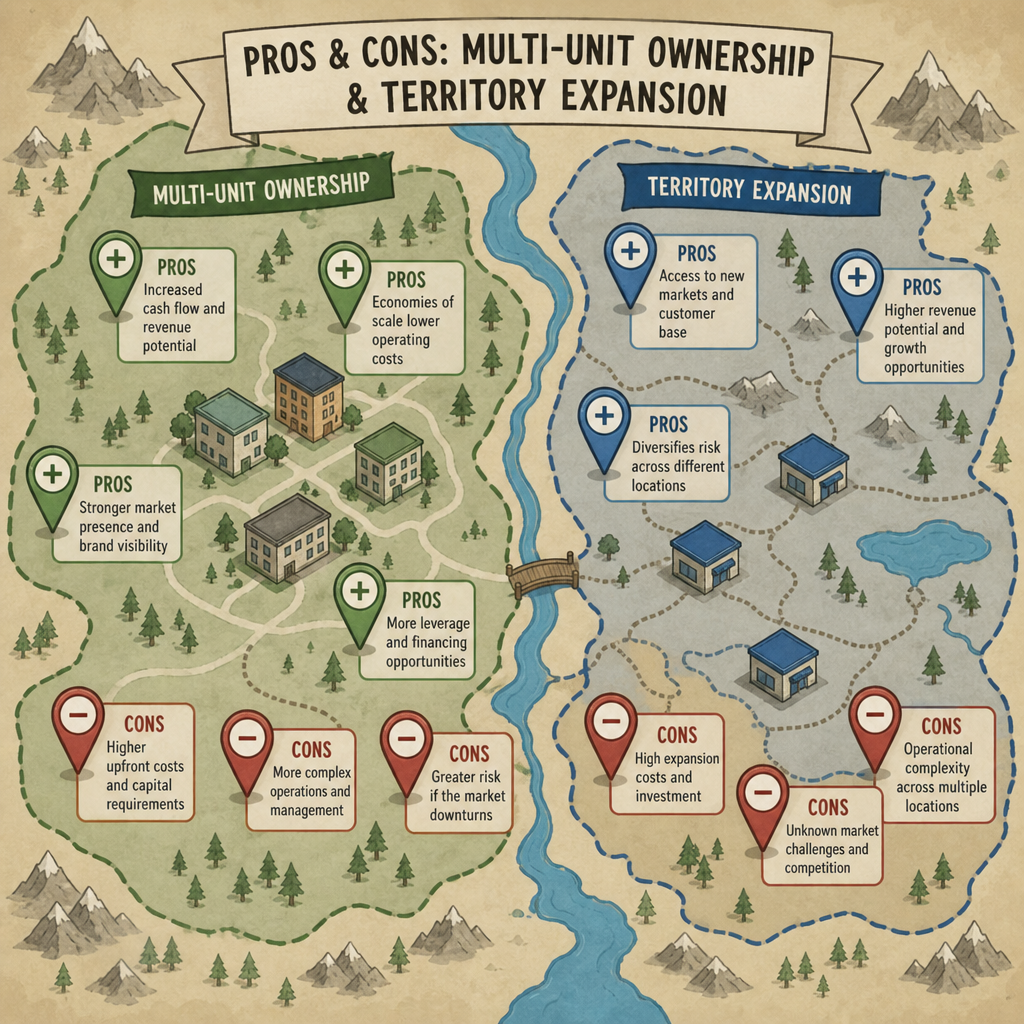
A major selling point of any franchise is the safety net provided by the parent company. However, the quality of this support varies wildly between brands. Training and Mentorship: A top-tier franchisor will provide robust initial training at their corporate headquarters, covering everything from POS systems to marketing and HR, alongside ongoing field support. Analyzing the Bottom Line: A rigorous evaluation of profitability is necessary before signing anything. Look closely at Item 19 in the FDD (Financial Performance Representations). Build a pro forma financial model estimating your rent, labor, royalties, and local marketing costs, then compare them against average franchisee revenues to gauge your potential ROI. Once you have mastered your first location, the natural next step is growth. Franchising offers incredibly structured pathways for scaling your wealth. Many successful operators eventually expand their footprint to benefit from economies of scale. You can share inventory, cross-train employees, and streamline management across locations, leading to exponentially higher profit margins. However, it requires a shift from a "doer" to a "leader," as you must build a robust middle-management infrastructure. For visionary investors, you might look beyond multi-unit deals into a master franchise model. As a master franchisee, you purchase the rights to a massive territory—sometimes an entire state or country. You then act as the franchisor for that region, recruiting sub-franchisees, providing local support, and taking a cut of their initial fees and ongoing royalties. It requires significant capital, but the passive income potential is unmatched. The beauty of the franchise model is its global adaptability. While specific legalities change across borders, the core principles of brand consistency remain the same. For instance, if you are looking for opportunities in major metropolitan hubs like Sydney, you will find booming markets focused heavily on health, wellness, and specialty coffee. High standards of living and dense urban populations make global target cities prime real estate for both emerging brands and established giants. If you’re focused on Australia, you may also want to explore franchises for sale in Melbourne to see what’s available across different industries and suburbs. Regardless of where you live, evaluating local demographics, foot traffic, and regional consumer trends is a non-negotiable part of your due diligence. Finding the perfect franchise for sale in 2026 is entirely within your reach if you approach the process with a methodical, business-first mindset. From evaluating low-cost entry points to understanding complex territorial exclusivity clauses, every step you take should be calculated. Remember, franchising is not an automatic guarantee of wealth, but it is a proven blueprint. By securing your financing, rigorously evaluating profitability, and leveraging the operational support of a great brand, you can confidently take your first step toward true financial independence. When you’re ready to act, you can browse verified businesses for sale or, if you’re planning an exit, sell a business with the right support and preparation. Q: How do I decide between buying a franchise and starting an independent business? A: It comes down to risk tolerance and desired autonomy. Starting from scratch gives full creative control but requires building brand awareness and systems from the ground up. Buying a franchise trades some creative freedom for a proven model: a recognized brand, established operations, and structured corporate support for a faster ramp to profitability. Q: What does “semi-absentee” franchise ownership really look like? A: You “manage the manager” rather than overseeing daily operations, typically investing 10 to 15 hours per week on financial oversight and high-level strategy while a hired team runs the day-to-day. Industries like fitness, laundry, and salons fit this model perfectly due to highly standardized processes. Q: How should I fund a franchise purchase, and what do franchisors look for financially? A: Franchisors strictly evaluate your net worth and liquid assets to ensure you can support the business until it turns a profit. Common funding options include SBA loans, ROBS (using retirement funds without penalties), and in-house franchisor financing for equipment or initial fees. Q: What legal documents must I review, and what clauses deserve extra attention? A: Carefully review the Franchise Disclosure Document (FDD)—specifically its 23 items covering litigation, fees, and financial health—alongside the franchise agreement. In the agreement, pay close attention to territorial exclusivity (to protect your local market share) and royalty calculations (how fees are assessed against gross sales). Q: How do I evaluate profitability before I sign? A: Deeply analyze Item 19 (Financial Performance Representations) in the FDD and build a customized pro forma model estimating rent, labor, royalties, and local marketing. As part of your due diligence, validate these numbers by interviewing current and former franchisees about their real-world expenses and ROI.Evaluating Operational Support and Financial Viability
Growth Strategies: Scaling Your Franchise Portfolio
Multi-Unit Ownership
Master Franchising vs. Sub-Franchising
Location Spotlight: Global and Local Opportunities
Final Thoughts: Taking the Leap in 2026
Frequently Asked Questions