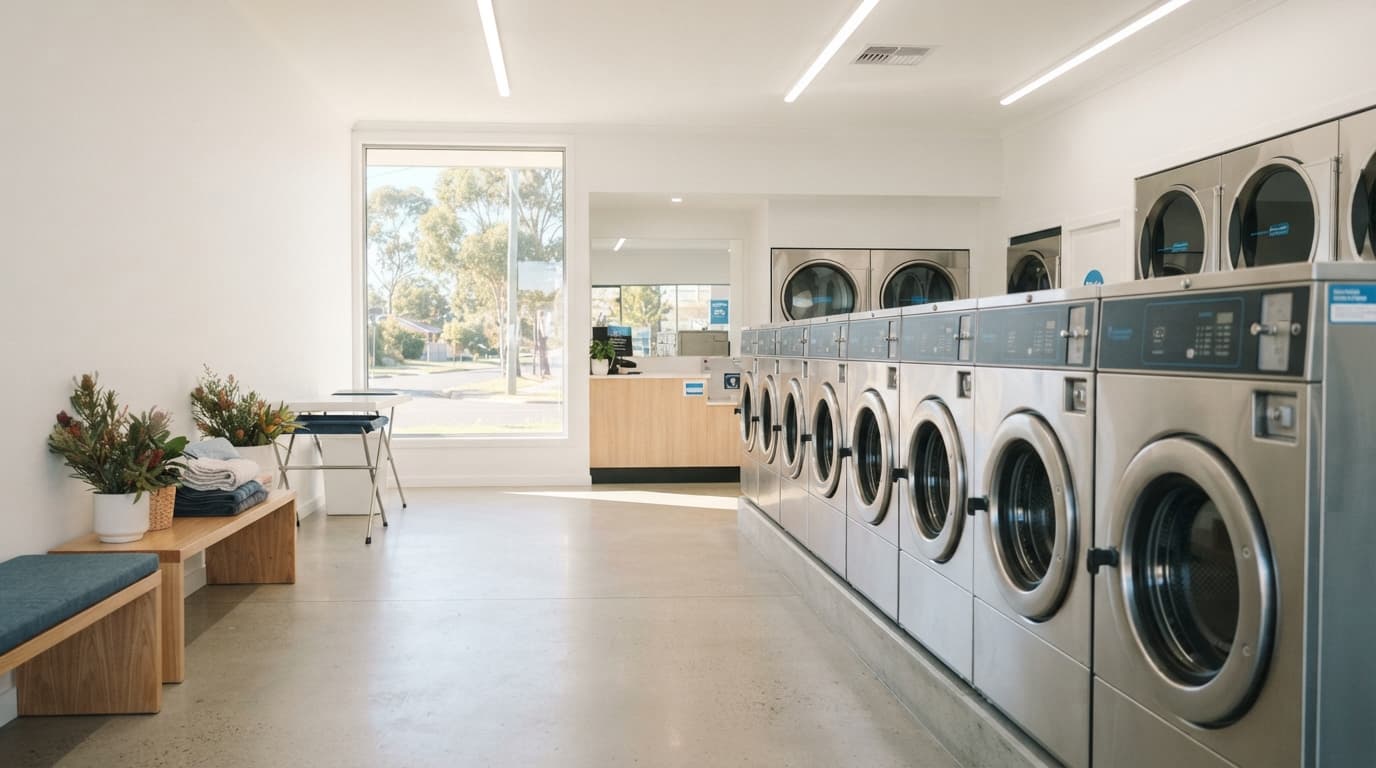
Laundromats are one of the most sought-after semi-passive businesses to buy in Australia, prized for their recurring demand, low staffing and strong margins. Most established laundromats sell for around $150,000 to $500,000, priced at roughly 2 to 4 times their adjusted annual profit, and a well-located site can deliver a return on investment as high as 30 percent. Thanks to modern card and app payment technology, today's laundromats are far more hands-off than the coin-operated rooms of the past.
If you want a business that generates income with minimal day-to-day involvement, a laundromat deserves a close look. Demand is defensive, the cash-for-service model avoids the debtor headaches of other industries, and the operation can often be managed remotely. This guide covers what laundromats cost, how profitable they really are, how passive they are in 2026, what to check before buying, and how to complete the purchase.
Why buy a laundromat?
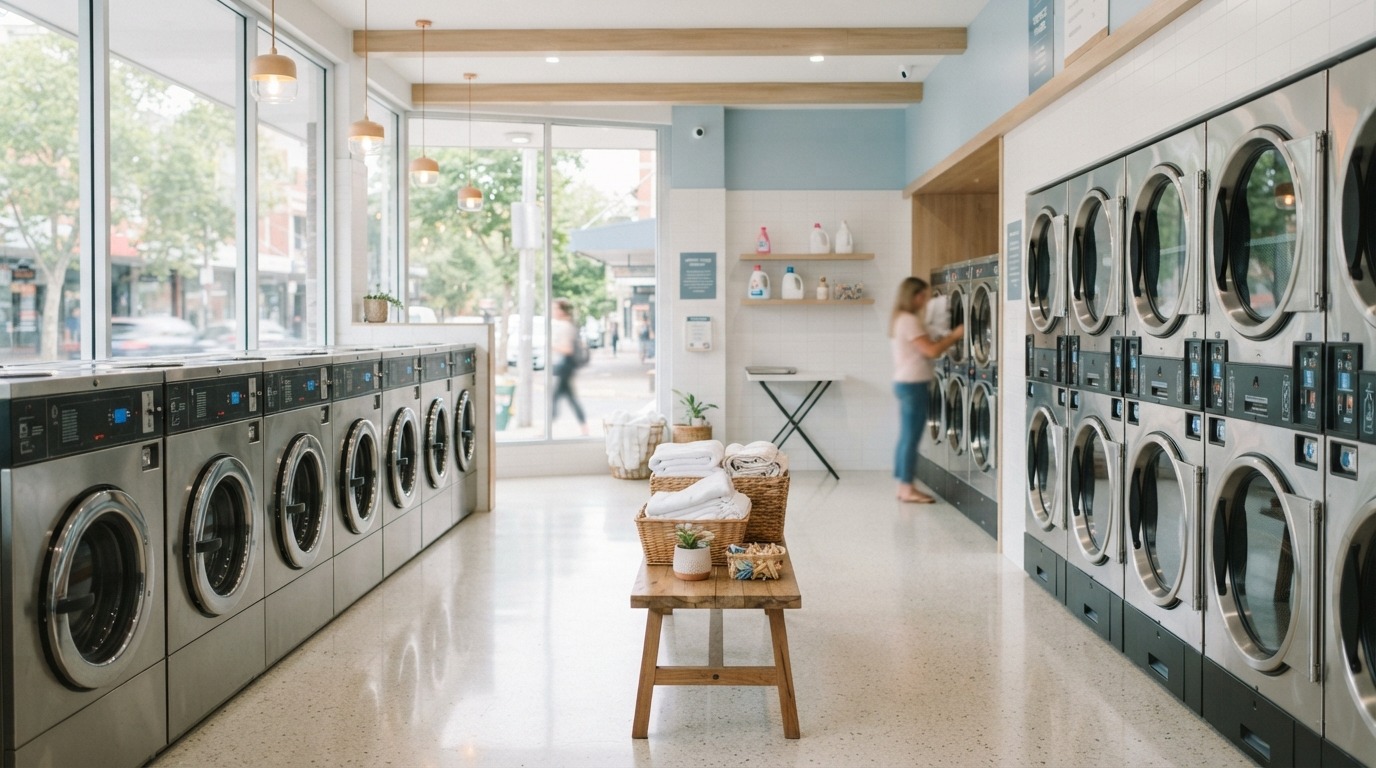
Laundromats are popular because they combine recurring, recession-resistant demand with low staffing and an immediate cash-for-service model. People always need clean clothes, so income stays relatively stable even in tough times, and most self-service sites run unattended or with only part-time cleaning. There are no debtors, minimal stock, and clear potential to scale by adding sites or extra services.
The core appeal is dependable income for limited effort. A few advantages stand out:
Recurring demand. Laundry is a non-negotiable household task, which gives laundromats defensive, repeat custom.
Low staffing. Many sites are unattended, or need only a few hours of cleaning a week.
Cash-for-service. Customers pay upfront, so there are no invoices, debtors or cash-flow gaps.
Scalability. Once your systems work, buying additional sites is a proven growth path.
Extra revenue. Wash-and-fold, dry-cleaning drop-off, ironing, delivery and vending can all boost the core self-service income.
These traits make laundromats one of the standout options in our guide to the most profitable businesses to buy in Australia.
How much does a laundromat cost to buy in Australia?
Most established laundromats in Australia sell for around $150,000 to $500,000, though smaller sites can start lower and large or multi-site operations can exceed $1 million. Independent laundromats are typically priced at 2 to 4 times their adjusted annual profit, with older machines and shorter leases attracting lower multiples. Building a new laundromat from scratch usually costs between $100,000 and $400,000.
Price depends heavily on the age of the equipment, the strength of the lease and the location. A modern, fully automated site in a busy shopping precinct commands a premium, while an older coin-operated venue on a short lease sells for less. Because laundromats are valued on a higher multiple than many small businesses, verifying the real profit is essential. Browse current businesses for sale or filter to businesses under $500k, where most laundromats sit, and use our guide on how much it costs to buy a business to budget the full purchase.
How profitable is a laundromat? Are they a good investment?
Well-run self-service laundromats can be very profitable, with net margins commonly in the 25 to 35 percent range and a return on investment as high as 30 percent in the right location. This is well above the roughly 10 percent average for the broader laundry and dry-cleaning industry, because self-service sites carry almost no labour cost. The main expenses are utilities and rent, so tight cost control and a strong location drive the returns.
It is worth separating the two figures. The wider Australian laundry and dry-cleaning sector, which includes staffed commercial and dry-cleaning operations, averages around 10 percent net. Unattended self-service laundromats sit much higher because they run without wages. That combination of high margins, defensive demand and semi-passive operation is exactly why laundromats are considered a strong investment, provided you buy a proven site at a fair price. For the full picture on assessing returns, see our guide on whether a business is a good investment, which applies the same principles.
Is a laundromat really passive income?
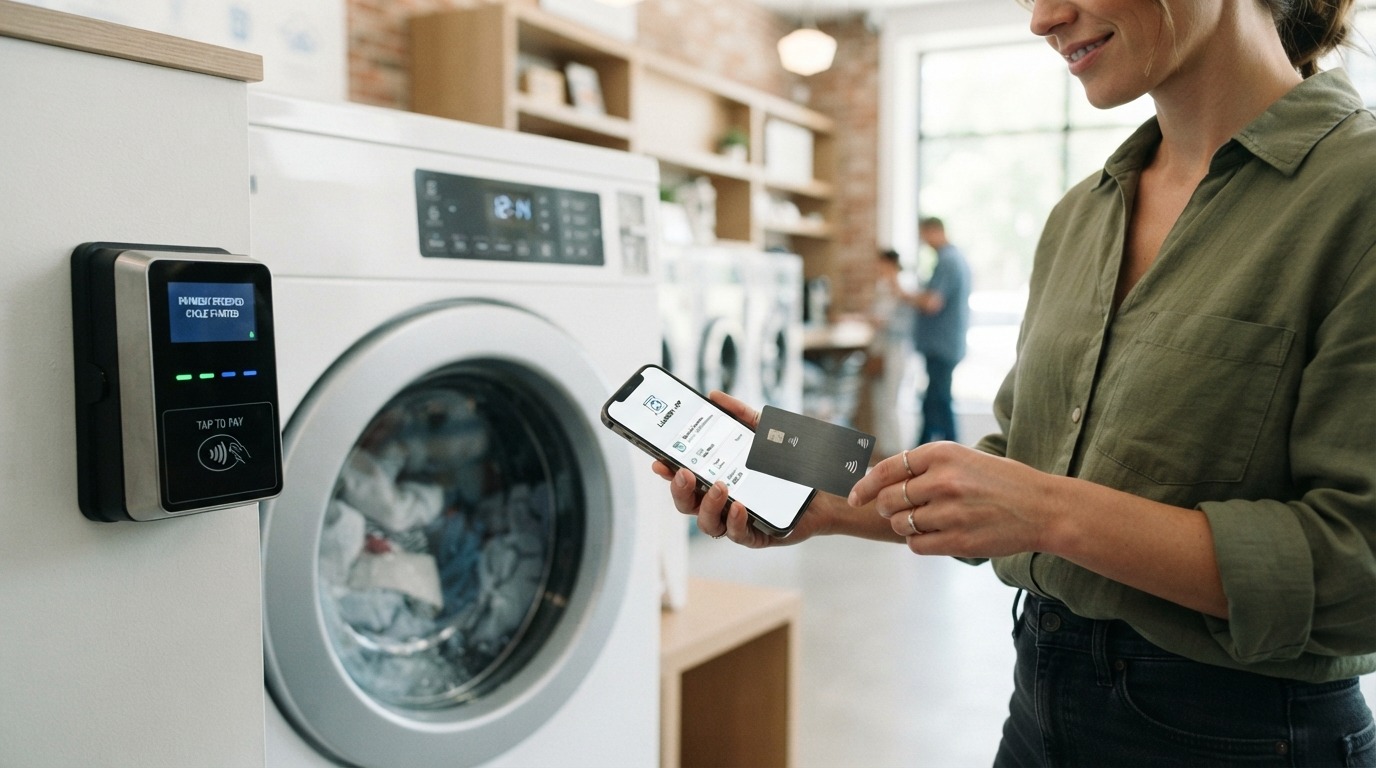
A modern laundromat is best described as semi-passive rather than fully passive. Today's sites use card and app payment systems and remote management dashboards, which remove cash collection and let owners monitor the business from their phone. You still need to handle cleaning, maintenance, restocking and the occasional repair, so it is low-effort, not no-effort. Owners who want true hands-off ownership usually pay someone for cleaning and callouts.
The technology has transformed the industry. The coin-operated laundromat of the past required weekly cash collection, floats and manual repairs. The laundromat of 2026 runs on cashless payments and connected machines that report faults and takings automatically. That makes it one of the most genuinely hands-off businesses you can buy, which is why it appeals to investors and busy professionals alike. Our roundup of asset-light and low-overhead businesses explores similar semi-passive models.
What should you check before buying a laundromat?
Before buying a laundromat, verify the income against utility bills and machine data (not just the seller's word), check the remaining lease term and rent, assess the age and condition of the machines, review water and electricity costs, and study the local competition and demand. Because laundromats are a cash-for-service business, independent verification of turnover is the single most important step.
The essential due-diligence checklist:
Verify the income. Cross-check claimed takings against water and electricity usage, machine dashboards and bank deposits. Utility consumption is hard to fake and reveals real usage.
Lease and rent. A long, secure lease is critical, since the machines are fixed to the site. Confirm the term, rent and renewal options.
Machine age and condition. Modern front-loaders are more energy-efficient and durable. Ageing machines mean looming replacement costs.
Running costs. Water, electricity and gas are the biggest expenses. Review recent bills carefully.
Location and demand. High apartment density, limited in-home laundry, foot traffic and parking all drive success.
Competition. Check nearby laundromats and any planned openings.
For the complete process, follow our ultimate guide to buying a business in Australia.
How do you value a laundromat?
Laundromats are usually valued at 2 to 4 times their adjusted annual profit, a higher multiple than many small businesses because of their semi-passive nature and steady demand. The valuation also considers the age and value of the equipment, the strength of the lease, and the location. Newer machines and a long lease push the multiple towards the top of the range, while old equipment and a short lease pull it down.
Because the machines are a significant asset, a laundromat valuation blends the earnings multiple with the value of the plant and equipment. Verify the adjusted profit carefully first, since the whole valuation rests on it. Run any asking price through our free business valuation tool, and see our full guide on how to value a business for the methods and formulas.
Should you buy an existing laundromat or build a new one?
For most buyers, buying an existing laundromat is safer and faster than building one from scratch. You inherit established cash flow, a loyal customer base, working equipment, council approvals and a proven location, skipping the risky and expensive setup phase. Building new gives you full control over the site and machines, but carries higher risk, a large upfront spend and no guarantee of demand.
Building a laundromat means months of site selection, lease negotiation, council approvals, fit-out and commissioning, with no income until you open. Buying an established site lets you step straight into revenue and focus on improving it. Unless you have a specific location and the appetite for a project, an existing laundromat with verified takings is usually the smarter buy.
What are the running costs of a laundromat?
The main running costs of a laundromat are utilities (water, electricity and gas), rent, machine maintenance and repairs, card-system fees, and insurance. Labour is minimal or zero for unattended self-service sites, which is what keeps margins high. Utilities are by far the largest ongoing expense, so energy-efficient machines and a fair utility arrangement in the lease make a real difference to profit.
Keeping these costs down is the key to profitability. Efficient front-loading machines use less water and power, a well-negotiated lease protects your margins, and preventative maintenance avoids expensive breakdowns. One useful advantage worth discussing with your accountant: laundromat equipment can qualify for small-business depreciation, and some items may be eligible for an immediate write-off, which can reduce taxable profit in the early years.
How do you buy a laundromat in Australia?
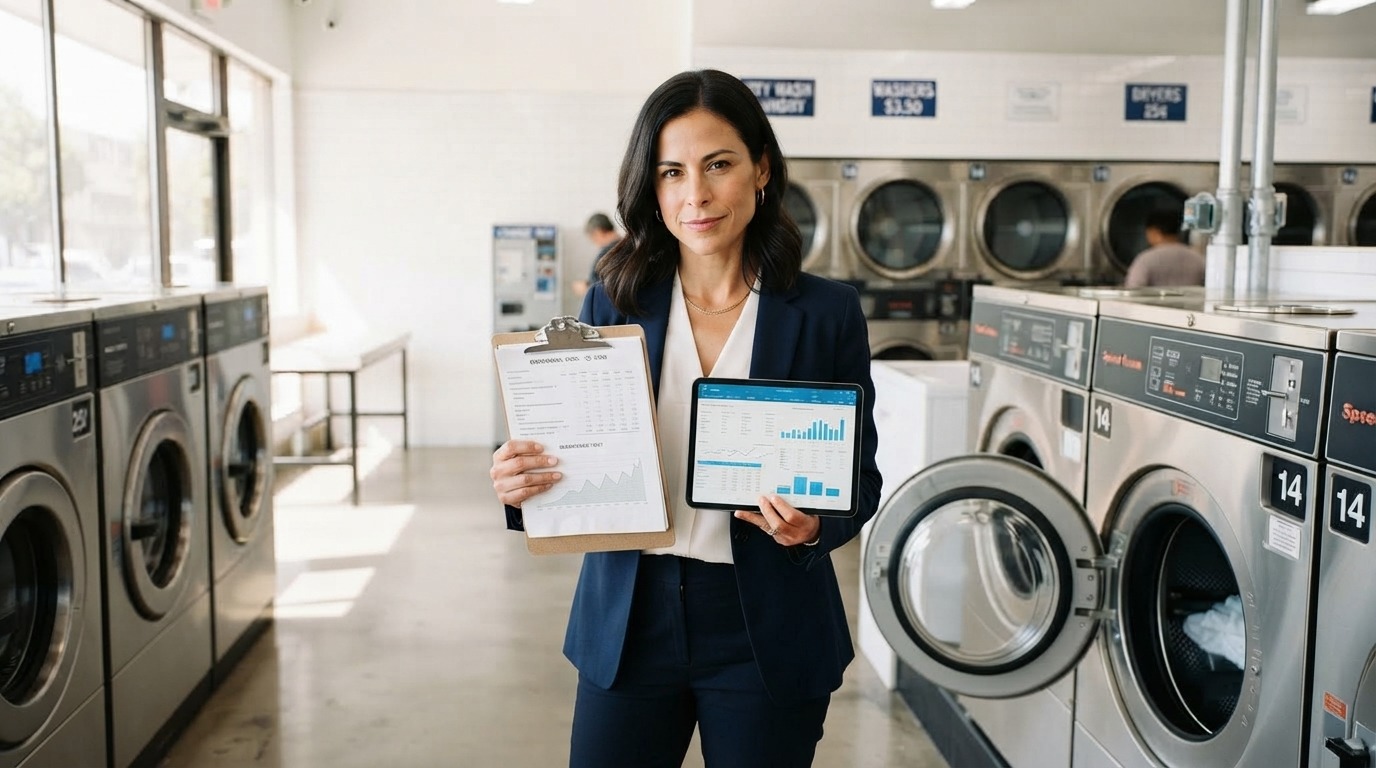
To buy a laundromat, define your budget, search and shortlist sites, verify the income and running costs, value the business, then complete the purchase, usually as an asset sale covering the equipment, goodwill and lease rights, with an accountant and solicitor. Assigning the lease into your name is one of the most important steps, since the machines cannot move.
The steps in brief:
Set your budget and preferred locations.
Shortlist laundromats and request the financials.
Verify income against utility bills, machine data and bank records.
Value the site and check the lease and equipment.
Negotiate, arrange finance, and complete the asset sale with professional advice.
Most laundromat purchases in Australia are structured as an asset sale, so you buy the equipment, goodwill and lease rights rather than the seller's company. If you need funding, our guide to business loans for buying a business covers your options.
Where can you find laundromats for sale in Australia?
You can find laundromats for sale on marketplaces like Exity, where you can filter by price and location. Start with the main listings, then narrow by budget and area, focusing on sites with modern machines, a long lease and verifiable income. Comparing sites across different suburbs often reveals better value and stronger demand.
Start by browsing businesses for sale on Exity and filtering to your budget, or explore businesses under $500k where most laundromats sit. If you are weighing a laundromat against other low-overhead options, our guides to the best businesses to buy under $100k and the most profitable businesses to buy are useful comparisons.
The bottom line
Laundromats remain one of the smartest semi-passive businesses to buy in Australia in 2026: defensive demand, high margins, low staffing and returns that can reach 30 percent in the right location. The keys are buying an existing site with verified income, securing a long lease, and checking the age of the machines. Do that, and a laundromat can deliver dependable, largely hands-off income for years.
Ready to explore? Browse businesses for sale on Exity and filter by price and location to find a laundromat that fits your budget.
Frequently asked questions
How much does it cost to buy a laundromat in Australia? Most established laundromats sell for around $150,000 to $500,000, priced at roughly 2 to 4 times their adjusted annual profit. Smaller sites can start lower, while large or multi-site operations can exceed $1 million. Building a new laundromat from scratch typically costs between $100,000 and $400,000, depending on location, machines and fit-out.
Are laundromats profitable in Australia? Yes. Well-run self-service laundromats can achieve net margins of 25 to 35 percent and a return on investment as high as 30 percent in the right location, well above the roughly 10 percent average for the broader laundry industry. Their profitability comes from low labour, recurring demand and an immediate cash-for-service model.
Is a laundromat passive income? A laundromat is semi-passive rather than fully passive. Modern sites use card and app payments and remote management dashboards, so there is no cash collection and owners can monitor takings from their phone. However, you still need cleaning, maintenance and occasional repairs, so most hands-off owners pay someone to handle these tasks.
How do you value a laundromat? Laundromats are usually valued at 2 to 4 times their adjusted annual profit, a higher multiple than many small businesses due to their semi-passive nature and steady demand. The valuation also factors in the age and value of the machines, the lease strength and the location. Newer equipment and a long lease command higher multiples.
What should I check before buying a laundromat? Verify the income against utility bills, machine data and bank records rather than trusting the seller's claims, check the lease term and rent, assess the age and condition of the machines, review water and electricity costs, and study local competition and demand. Independent verification of turnover is the most important step in a cash-based business.